
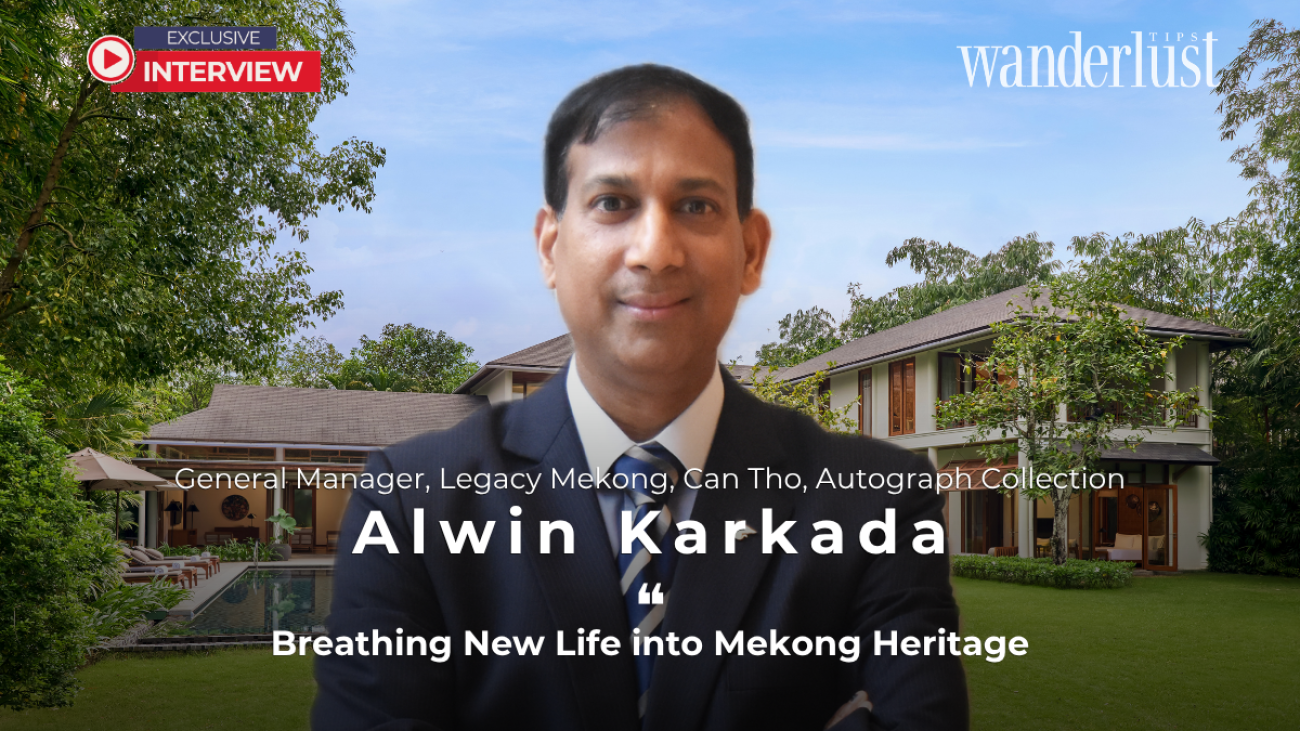
Legacy Mekong, Can Tho, Autograph Collection

Breathing New Life into Mekong Heritage

On Con Au Islet, reachable only by boat across the Hau River, Legacy Mekong, Can Tho, Autograph Collection treats heritage as something lived rather than displayed. General Manager Alwin Karkada explains how a river crossing, local flavors, a team rooted in the Delta and unhurried days beneath century-old banyan trees invite guests to understand the Mekong on its own terms. Dear Mr. Karkada, thank you for taking the time to speak with Wanderlust Tips about the living culture of the Mekong Delta at Legacy Mekong, Can Tho, Autograph Collection, as part of our feature, Living Heritage.
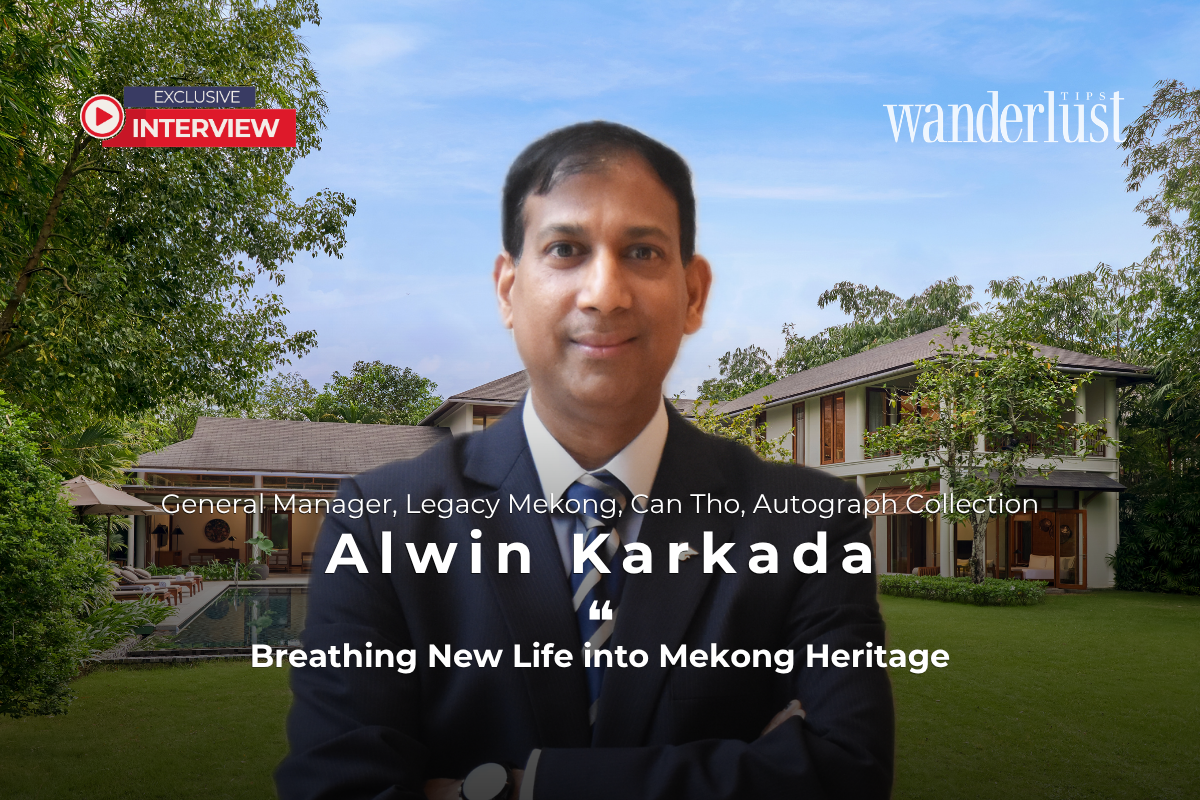
The resort sits on Con Au Islet in the Hau River, a place guests can only reach by boat. At Legacy Mekong, what does “living heritage” mean in the Mekong Delta, where so much of the culture unfolds in everyday life along the river?

For us, “living heritage” means experiencing the Mekong as it is lived today, rather than simply looking back at its past. Our location on Con Au Islet makes that connection especially meaningful. Here, water is not simply part of the landscape; it has shaped how people travel, trade, cook, gather and live for generations. At Legacy Mekong, we want guests to encounter this heritage naturally through local flavors and ingredients, craftsmanship, stories, rituals and, most importantly, through the people they meet. These are not recreations of the past, but expressions of a culture that continues to evolve. Our role is to create the space for guests to slow down and engage with that way of life, leaving with a deeper understanding of the Mekong not only as a destination, but as a living culture shaped by the river.

Every stay begins with a private boat transfer from the Legacy Mekong Pavilion to the islet. How does that short river crossing prepare guests to experience the Mekong on its own terms?

The experience of Legacy Mekong begins before guests even arrive. From our Pavilion, they step aboard our private boat and, within a short journey, the city begins to recede. The sounds change, the pace slows, and the river becomes the center of the experience. That transition is important because the Mekong has always been understood from the water. Arriving by boat allows guests to experience the landscape in its natural rhythm, passing along the Hau River before entering the greenery and quiet of Con Au Islet. It is a relatively short crossing, but emotionally it creates a real sense of departure. You leave the pace of the city behind and arrive more open to observing, listening and experiencing the Delta on its own terms.
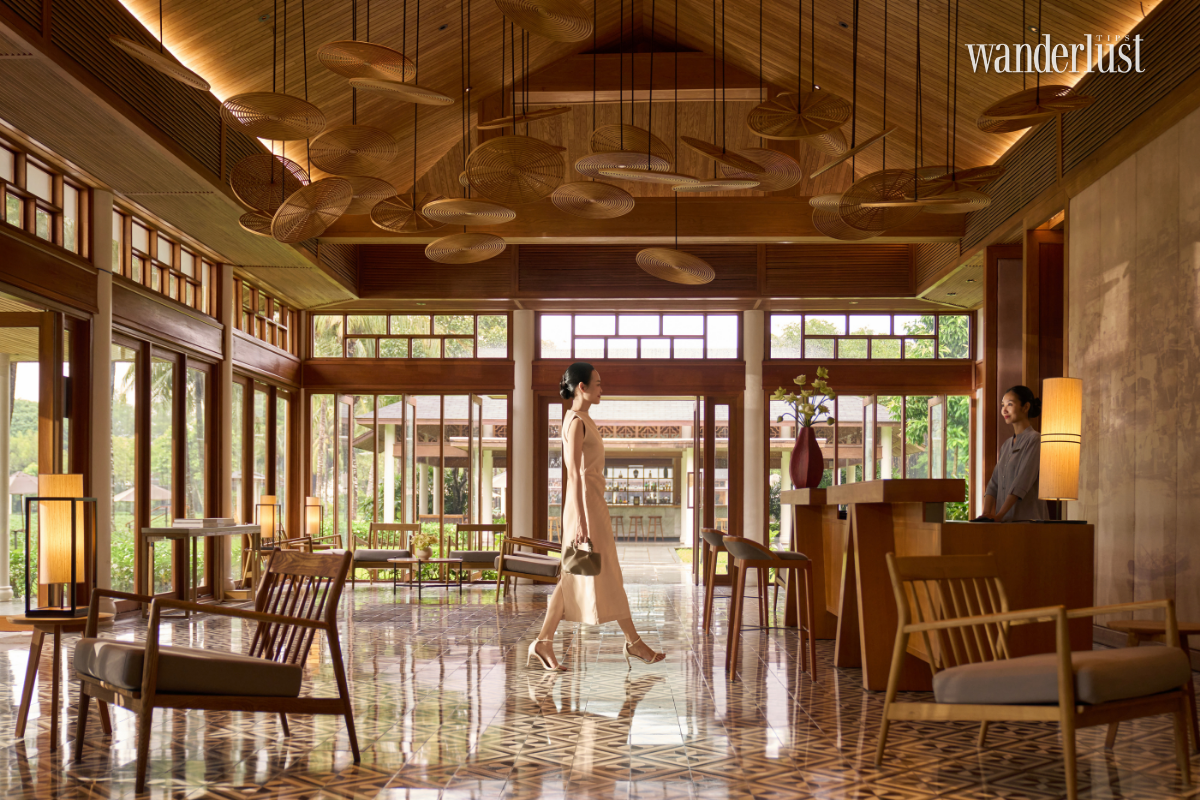
The resort describes its design as a blend of contemporary elegance and Vietnamese craftsmanship. When heritage becomes part of a room, a bungalow or a villa, how does Legacy Mekong keep it feeling authentic and lived-in, rather than purely decorative?

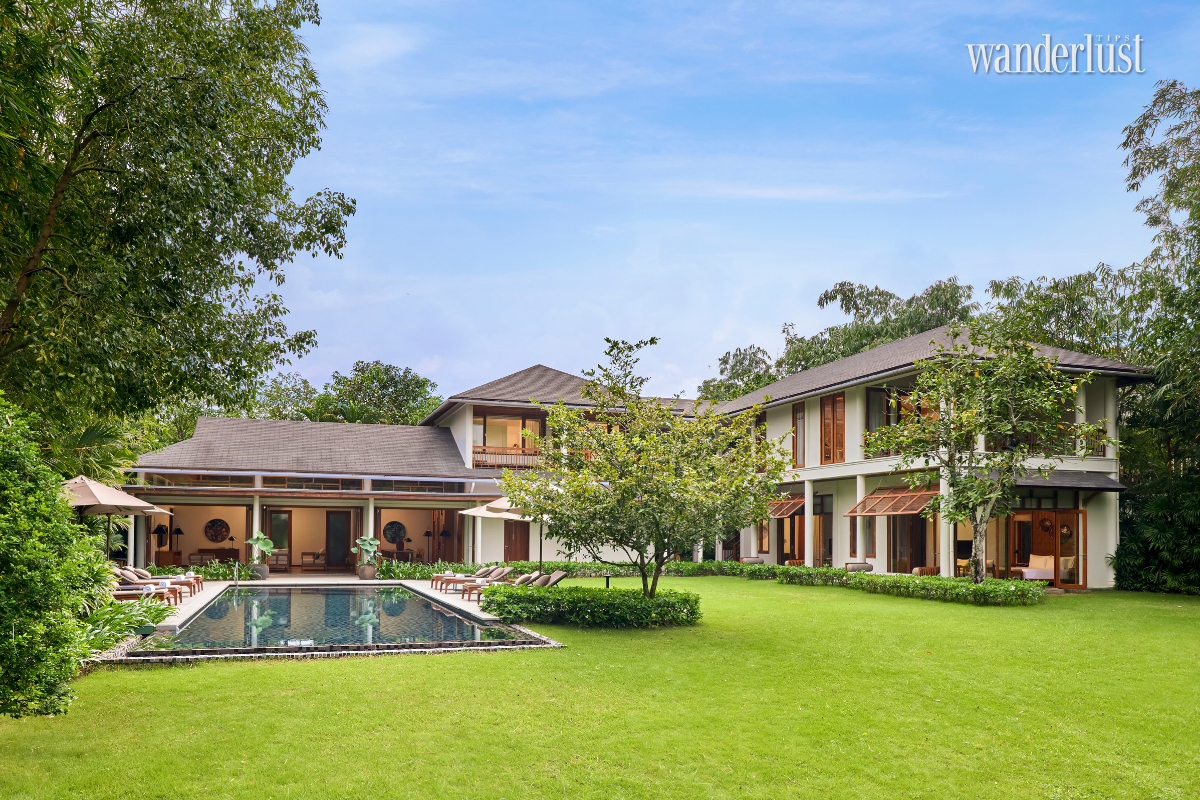
For us, authenticity comes from allowing heritage to inform the atmosphere rather than turning it into decoration. Our bungalows sit naturally among tropical gardens, beneath mature banyan trees and beside the river and lotus ponds, while the villas offer a more contemporary and minimalist interpretation of living in the Delta. Vietnamese craftsmanship, natural materials, textures and details create a connection to place, but we also want the spaces to feel comfortable and relevant to the way people travel today. Heritage should never feel like a museum. Perhaps the most important design element is what surrounds the architecture itself: the changing light, the water, the greenery and the century-old banyan trees. These are living elements of the property, and they give every space a character that could only belong here.

At the resort’s restaurant, Mekong cuisine is prepared with local ingredients and regional flavors. What can a Mekong meal served there tell guests about the Delta that a guidebook cannot?

A guidebook can explain what people in the Mekong eat, but a meal can tell you why they eat that way. The Delta is one of Vietnam’s most fertile regions, and its cuisine has always been closely connected to the river, the seasons and what the land provides. At our restaurant, local ingredients and regional flavors allow us to tell those stories through taste. The kitchen also brings guests closer to the process: the ingredients, techniques and people behind each dish. For me, food is one of the most immediate ways to understand a place. A flavor can evoke a family memory, an ingredient can reveal something about the landscape, and a recipe can carry knowledge from one generation to another. That emotional dimension is something no guidebook can fully reproduce.

Legacy Mekong Spa draws on natural textures, herbal scents and treatments inspired by traditional healing practices. How does the spa balance respect for those traditions with the expectations of today’s international wellness traveler?

Our approach is to take inspiration from local knowledge without trying to reproduce traditional practices simply for effect. Natural textures, herbal aromas and treatments inspired by familiar ingredients create a sense of place, while the quality, comfort and delivery of the experience meet the expectations of today’s international traveler. Beyond the spa, guests can also choose from contemporary activities such as yoga, Pilates and outdoor movement, allowing wellness to feel personal rather than prescribed. Ultimately, the Mekong itself is an important part of that experience. The greenery, water and slower rhythm of the islet naturally encourage guests to disconnect from the pace of everyday life. Sometimes wellness is not about doing more; it is about creating enough space to become still again.

The Cai Rang and Phong Dien floating markets remain among the most vivid expressions of daily life in the Delta. When guests set out to explore them, how does the resort encourage an experience that feels respectful to local communities, rather than simply a sightseeing stop?

The floating markets are meaningful because they developed from everyday life and commerce on the river; they were never created as tourist attractions. That distinction is important. We encourage guests to approach them with curiosity and respect: to observe the rhythms of the market, interact thoughtfully with local vendors, try local produce and understand the role the river continues to play in people’s livelihoods. We also believe that responsible travel should create value for the communities being visited. The best experience is not necessarily about seeing as much as possible, but about taking the time to understand what you are seeing. When travelers approach the Delta in that way, tourism becomes an exchange rather than simply observation.

Around Can Tho, landmarks such as Binh Thuy Ancient House, Ong Pagoda and the Munirangsyaram Khmer Buddhist Temple reflect the many cultures that have shaped the Delta. How does Legacy Mekong help guests appreciate that layered identity during their stay?

One of the fascinating things about Can Tho and the wider Delta is that there is no single cultural story. Vietnamese, Chinese and Khmer influences have existed alongside one another for generations, shaping architecture, spirituality, cuisine and everyday customs. Places such as Binh Thuy Ancient House, Ong Pagoda and Khmer temples allow guests to see those layers beyond the resort. We encourage exploration, but we also try to provide context, because understanding why a place matters often makes the experience far richer than simply visiting it. Back at Legacy Mekong, that same philosophy continues through food, craftsmanship and storytelling. We want the resort to be a starting point for discovering the region, rather than an environment that separates guests from it.

Much of a region’s heritage lives in its people. How does the Legacy Mekong team bring the warmth and stories of the Mekong into the way they welcome guests each day?

The most genuine expression of Mekong hospitality comes from our people. Many members of our team have grown up in this region, so their relationship with the Delta is personal rather than something learned from a script. You feel that in small interactions: the way a local ingredient is explained, a story shared about a tradition, or a recommendation given for somewhere to visit. These moments may appear simple, but they often become the memories guests take home. We can design beautiful spaces and experiences, but genuine warmth cannot be manufactured. Our responsibility is to give our associates the confidence to bring their own knowledge, personality and connection to the region into the way they welcome guests. In that sense, our people are perhaps our most important storytellers.
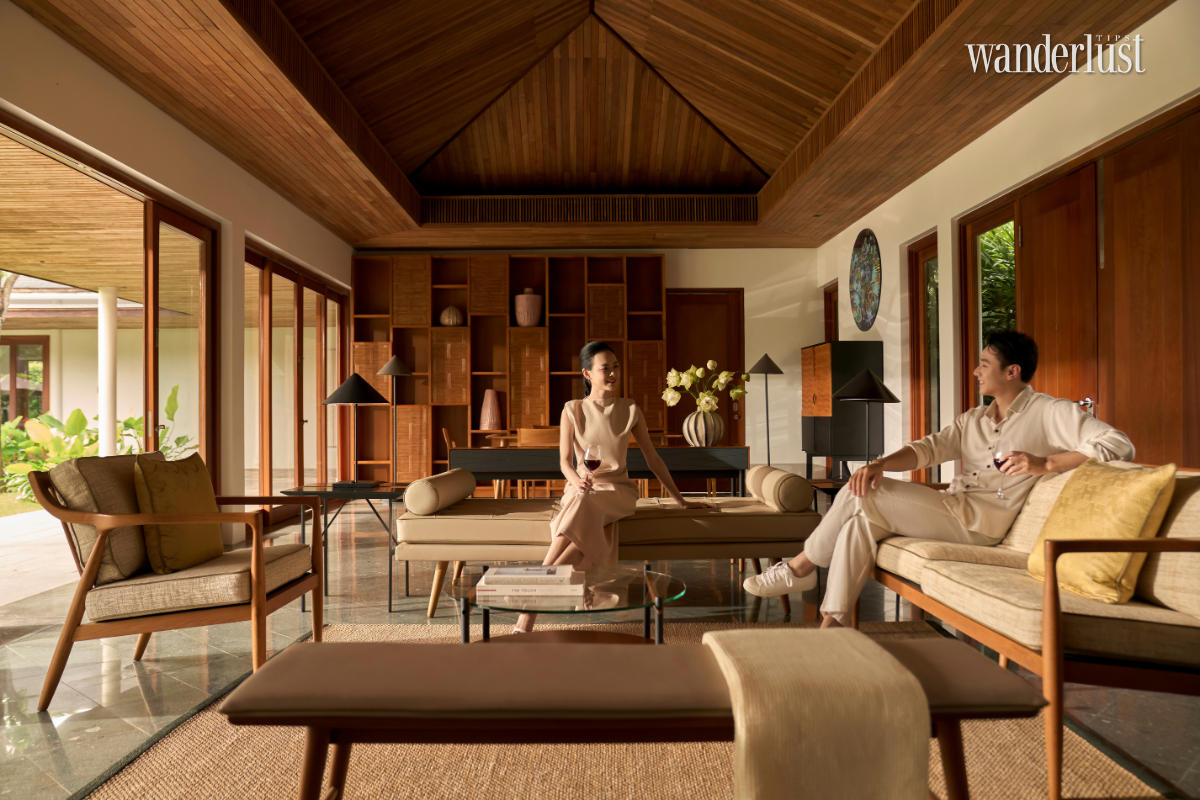
With family villas of three to five bedrooms and a dedicated Kids Club, the resort clearly welcomes multi-generational travel. How can a family holiday on the islet become a way of passing Mekong heritage on to the next generation?

Children often connect with culture differently from adults. They learn through touching, making, tasting, exploring and asking questions, so we try to make their experience of the Mekong feel natural and playful. Our three-, four- and five-bedroom villas allow several generations to stay together, while the Kids Club, creative workshops, outdoor spaces and nature-led activities give younger guests room to discover at their own pace. But perhaps the most meaningful part is simply experiencing the destination together: arriving by boat, walking beneath old trees, discovering local flavors or watching life along the river. These shared experiences create conversations between generations. Heritage becomes something children remember because they experienced it with their family, rather than something they were taught.

Legacy Mekong has already received prestigious international awards. Looking ahead, how does the resort hope to shape the way travelers see Can Tho and the Mekong Delta as a destination for living heritage?

International recognition is meaningful to us, but what matters more is what that recognition can contribute to the destination around us. We would like Legacy Mekong to help broaden the way international travelers perceive Can Tho and the Mekong Delta. The region should not simply be somewhere travelers pass through briefly or visit only for the floating markets. There is enough cultural depth, nature, cuisine and human connection here to reward a slower and more considered journey. As part of Autograph Collection, we have the opportunity to connect that very local story with an international audience while preserving what makes it distinctive. If guests leave wanting to understand more about the Mekong, stay longer, return again and encourage others to experience it thoughtfully, then I believe we are contributing something meaningful to the destination.
Wanderlust Tips sincerely thanks Mr. Karkada for sharing his valuable insights into the living culture of the Mekong Delta, and wishes him and the Legacy Mekong team continued success.

About Legacy Mekong, Can Tho, Autograph Collection

Set across eight hectares of lush greenery on secluded Con Au Islet in the Hau River, Legacy Mekong, Can Tho, Autograph Collection is a retreat shaped by the landscape, culture and rhythms of Vietnam’s Mekong Delta. Accessible by a private boat journey from the hotel’s Pavilion, the resort features 60 bungalows and 5 private pool villas surrounded by tropical gardens, lotus ponds and century-old banyan trees. Its experiences draw inspiration from the region’s cuisine, craftsmanship, nature and everyday traditions, while contemporary facilities offer space for wellness, recreation and family connection. As part of Autograph Collection, Legacy Mekong celebrates an individual sense of place, inviting travelers not simply to visit the Delta, but to slow down, engage with its stories and experience what the resort calls “The Mekong’s Quiet Wonder.”

Whispers of the Forest Beneath Garrya Mù Cang Chải’s Bamboo Roof
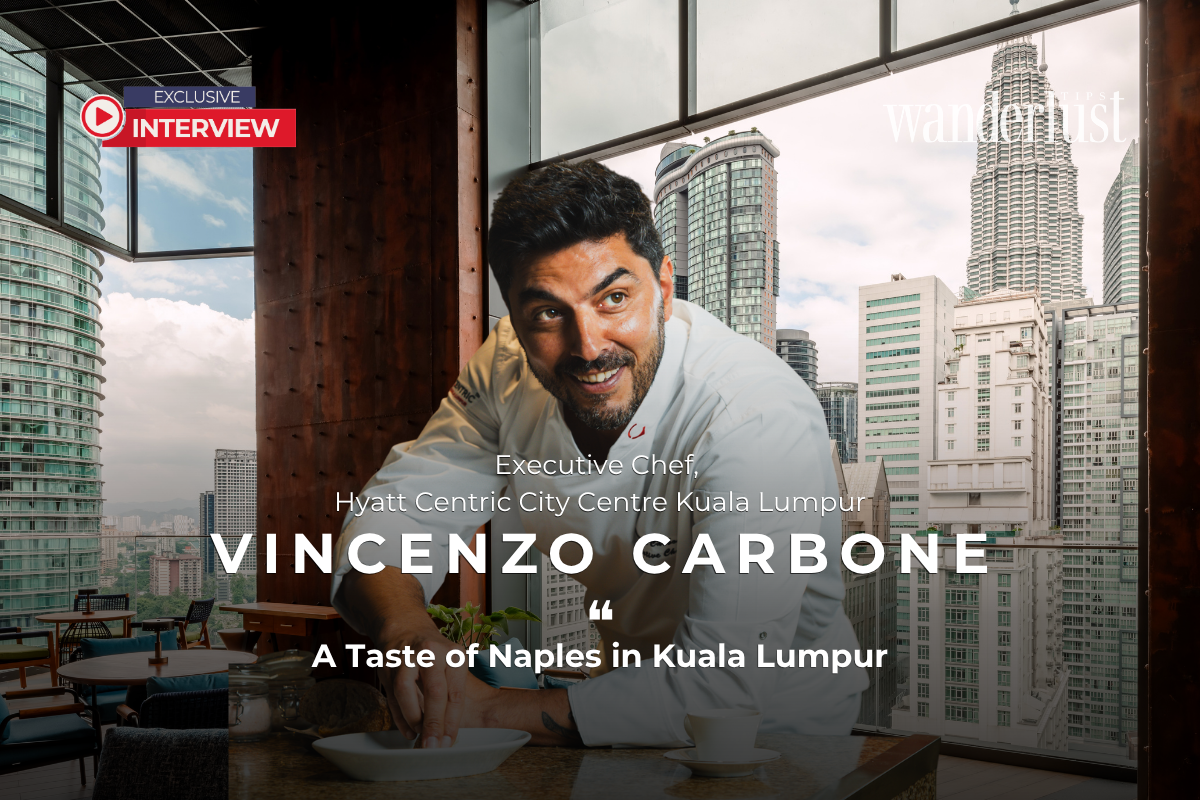
Hyatt Centric City Centre Kuala Lumpur

A Taste of Naples in Kuala Lumpur

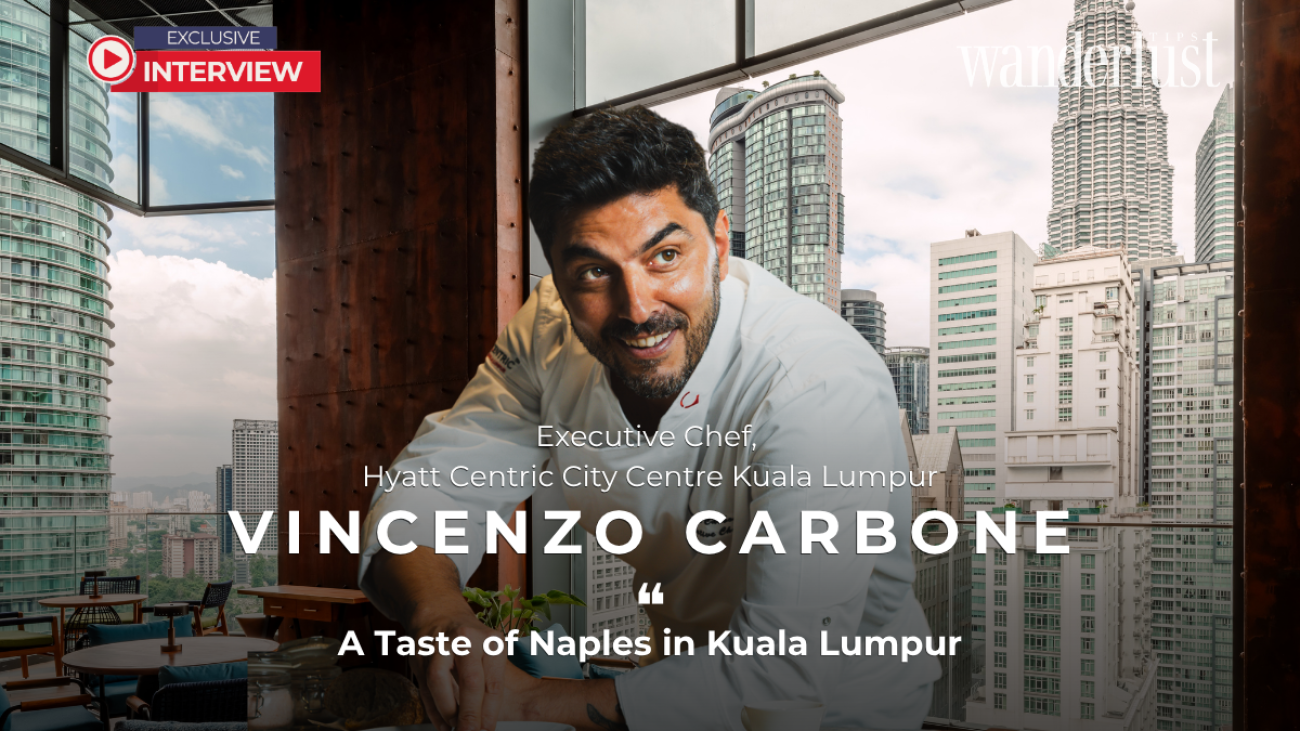
At Hyatt Centric City Centre Kuala Lumpur, the kitchen carries an unmistakably Neapolitan accent, shaped by three decades of cooking across four continents. In this month’s “Behind the Kitchen” feature, Executive Chef Vincenzo Carbone speaks to Wanderlust Tips about the volcanic-stone oven he carried home from Naples, the philosophy binding IL Forno, TanBuri and @21 Rooftop Bar under one roof, and why he believes the simplest dishes are always the hardest to master.

Dear Chef Enzo, thank you for taking the time to speak with Wanderlust Tips as part of our “Behind the Kitchen” feature. We are delighted to have you with us today.

You grew up in Naples and have cooked across four continents over the past 30 years. Looking back, what moment or place changed the way you think about food most profoundly?

I always say my first kitchen was my family home in Naples. Growing up, food was never just about eating. It was about family, tradition, conversation and generosity. Watching my mother and grandmother cook taught me that the best dishes are often the simplest, provided they are made with care and respect for the ingredients. Travelling across different countries reinforced that lesson. Every culture has its own traditions, but the common thread is that food brings people together. That is something I have carried with me throughout my career. Whether I am cooking in Italy, China or Malaysia, I always try to create food that connects people around the table.

As Executive Chef of Hyatt Centric City Centre Kuala Lumpur, you oversee the entire culinary direction of the hotel, from IL Forno to TanBuri to the rooftop bar. How do you bring coherence to such different dining concepts under one roof?

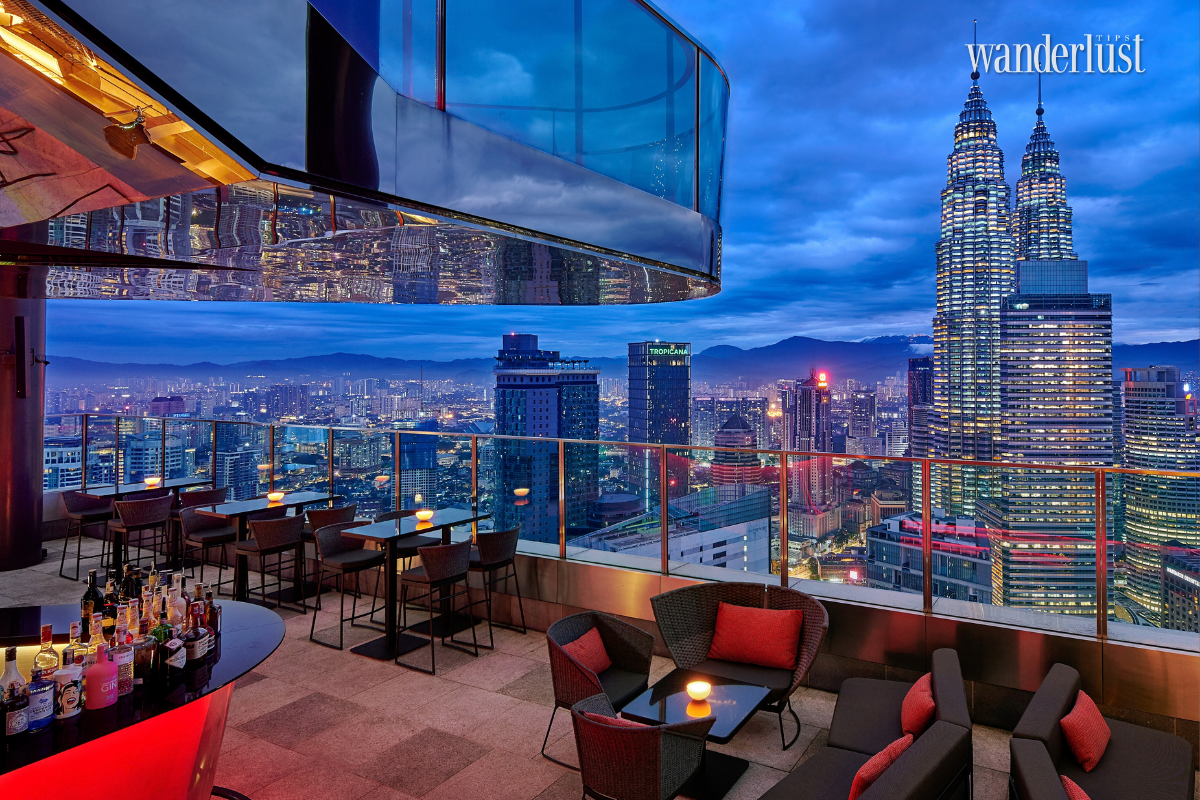
Although each outlet has its own personality, they all share the same philosophy: honest food, quality ingredients and memorable experiences. IL Forno celebrates authentic Italian cuisine rooted in my heritage. TanBuri focuses on approachable local comfort flavours, while @21 Rooftop Bar is about bringing people together over creative drinks and casual bites with a view of the city. What connects them is consistency. Every dish, every drink and every interaction should reflect the same commitment to quality, hospitality and creating moments that guests remember.

Hyatt Centric as a brand is built around connecting guests to local culture. How does that philosophy translate into the food and beverage experience you are building here in Kuala Lumpur?

One of the things I enjoy most about working in Kuala Lumpur is its incredible diversity. People here are curious about food and very open to discovering different flavours. While IL Forno remains authentically Italian, we also recognise where we are. We think about how local diners enjoy sharing food, how families gather, how friends celebrate and how travellers explore a city through its dining scene. Our goal is not to change Italian recipes. It is to present authentic Italian cuisine in a way that feels welcoming and relevant to the people dining with us in Kuala Lumpur.

IL Forno is described as a trattoria, a word that carries a very specific feeling in Italy. What does that word mean to you, and how have you tried to bring that spirit to life here?

For me, a trattoria is about warmth rather than formality. It is the kind of place where people feel comfortable returning again and again. The food is honest, portions are generous, conversations are lively and everyone feels welcome. That is exactly what we wanted IL Forno to become. We want guests to enjoy authentic Italian food in a relaxed atmosphere, whether they are celebrating a special occasion or simply sharing a meal with family and friends after work.

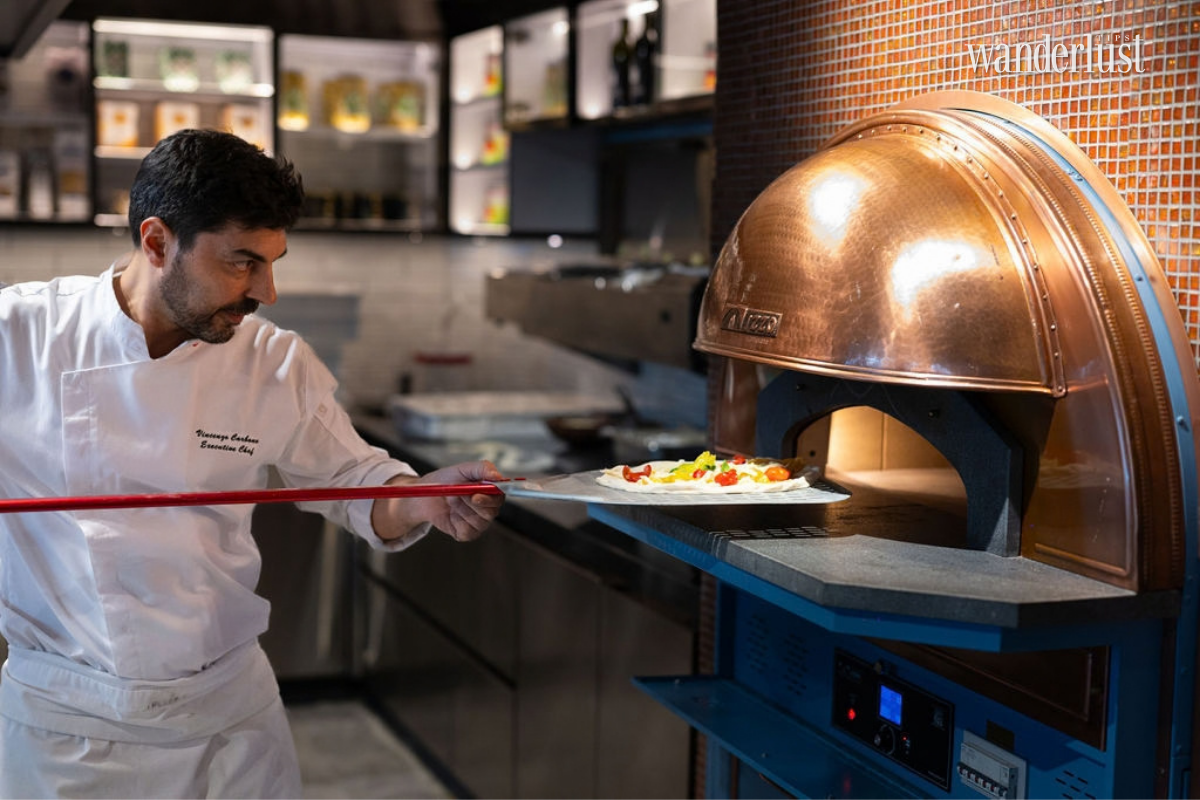
You brought a pizza oven from Naples to Kuala Lumpur, hand-crafted from volcanic stone. What does that oven mean to you, and what does it bring to the kitchen that nothing else can replace?

The oven is much more than a piece of equipment. It represents where I come from. Traditional Neapolitan pizza depends on extremely high temperatures and the way heat circulates inside the oven. Combined with our 36-hour slow-matured dough, it creates the light, airy crust and distinctive texture that simply cannot be replicated in a conventional oven. Every pizza that comes out of that oven carries a small piece of Naples with it, and I think our guests can taste the difference.

The one-metre antipasto has become a signature at IL Forno. Where did that idea come from, and what do you hope guests feel when it arrives at the table?

Italian dining has always been about sharing. The one-metre antipasto was designed to recreate that feeling of gathering around a table before the main meal begins. It encourages people to explore different flavours together, rather than ordering individual starters. When it arrives at the table, I hope it creates excitement. It is often the moment when everyone puts down their phones, starts talking, reaches across the table and simply enjoys being together. Those are the moments that make dining memorable.

Malaysian diners are adventurous and discerning. What do you most want them to discover about the dining experiences at this hotel?

I hope they discover authenticity. Authenticity does not mean making food complicated. It means respecting traditions, using quality ingredients and cooking with purpose. Whether someone visits IL Forno, TanBuri or @21 Rooftop Bar, I want them to leave feeling that they experienced something genuine. Good food should tell a story, and every outlet has its own story to share.

After 30 years in professional kitchens, what still excites you about cooking?

Every day is different. New ingredients, new ideas, new people and new challenges keep cooking interesting. I also enjoy mentoring young chefs and watching them develop their own confidence and creativity. The day I stop learning is the day I should stop cooking. Fortunately, I still learn something every day.

If you could share one dish from the current menu that says everything about what your kitchen stands for, what would it be and why?

It would have to be the Pizza Margherita. Many people think it is the simplest pizza, but that simplicity is exactly what makes it so challenging. There is nowhere to hide. Every ingredient matters, every step matters and every second in the oven matters. It represents everything I believe in: respecting tradition, using quality ingredients and letting craftsmanship speak for itself.

You have said that food means happiness. What does that look like for you at the end of a long service? 

For me, happiness is walking through the restaurant and seeing people still talking after they have finished their meal. It is hearing laughter from a table, seeing empty plates, or watching someone introduce a friend to a favourite dish for the first time. Cooking is hard work, but moments like those remind me why I chose this profession many years ago. If people leave happier than when they arrived, then we have done our job.

Wanderlust Tips extends its warmest thanks to Chef Enzo for a conversation as generous as his cooking. We look forward to tasting more of his Neapolitan craftsmanship at Hyatt Centric City Centre Kuala Lumpur.

About Hyatt Centric City Centre Kuala Lumpur

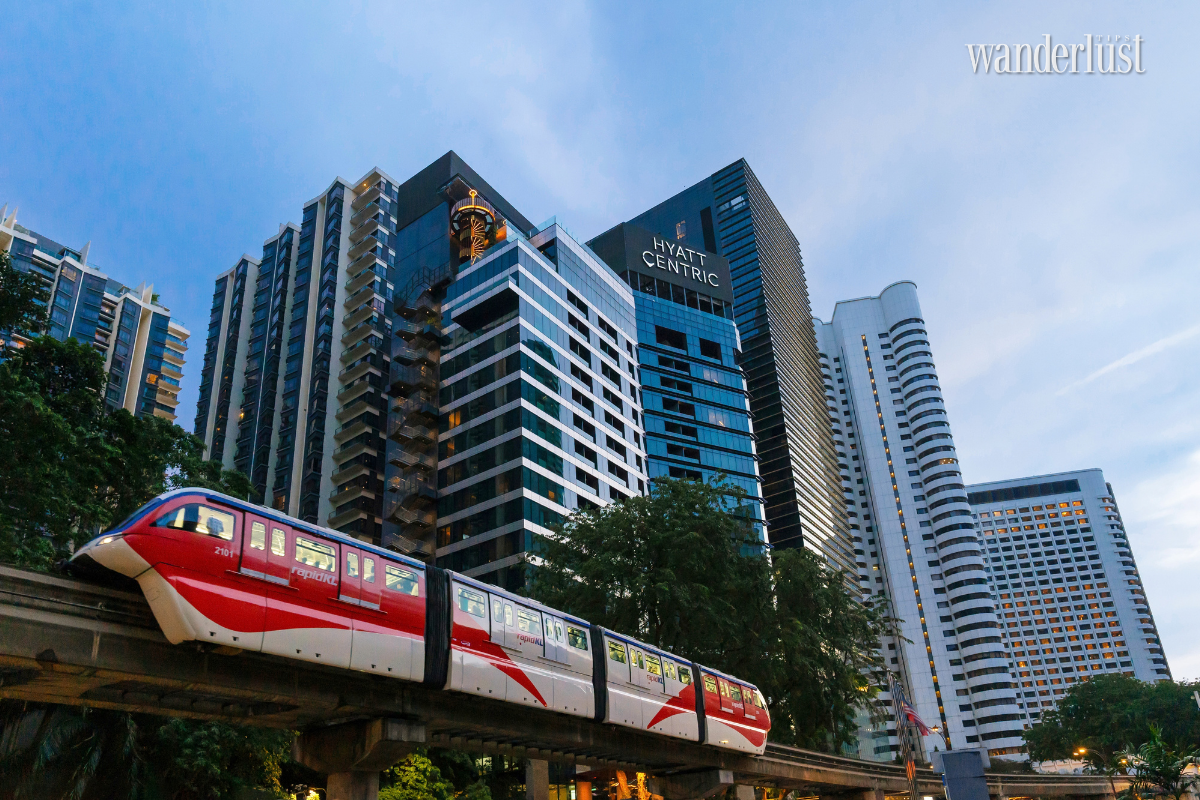
Hyatt Centric City Centre Kuala Lumpur places travellers in the heart of the city, within walking distance of the Petronas Twin Towers, KL Tower and Bukit Bintang. Inspired by Kuala Lumpur’s tin-mining heritage, the hotel’s contemporary design features industrial textures, bold local artwork and vibrant spaces that reflect the city’s creative spirit. With 312 stylish rooms and suites, including both balcony and non-balcony options, guests can choose how they experience the city. Three distinctive dining destinations, TanBuri, IL Forno and @21 Rooftop Bar, along with a 24-hour fitness centre and infinity saltwater pool, make the hotel the perfect launchpad to discover Kuala Lumpur like a local.

Chef Azizi and His Journey to Elevate Malaysian Cuisine

Sofitel Metropole Hanoi

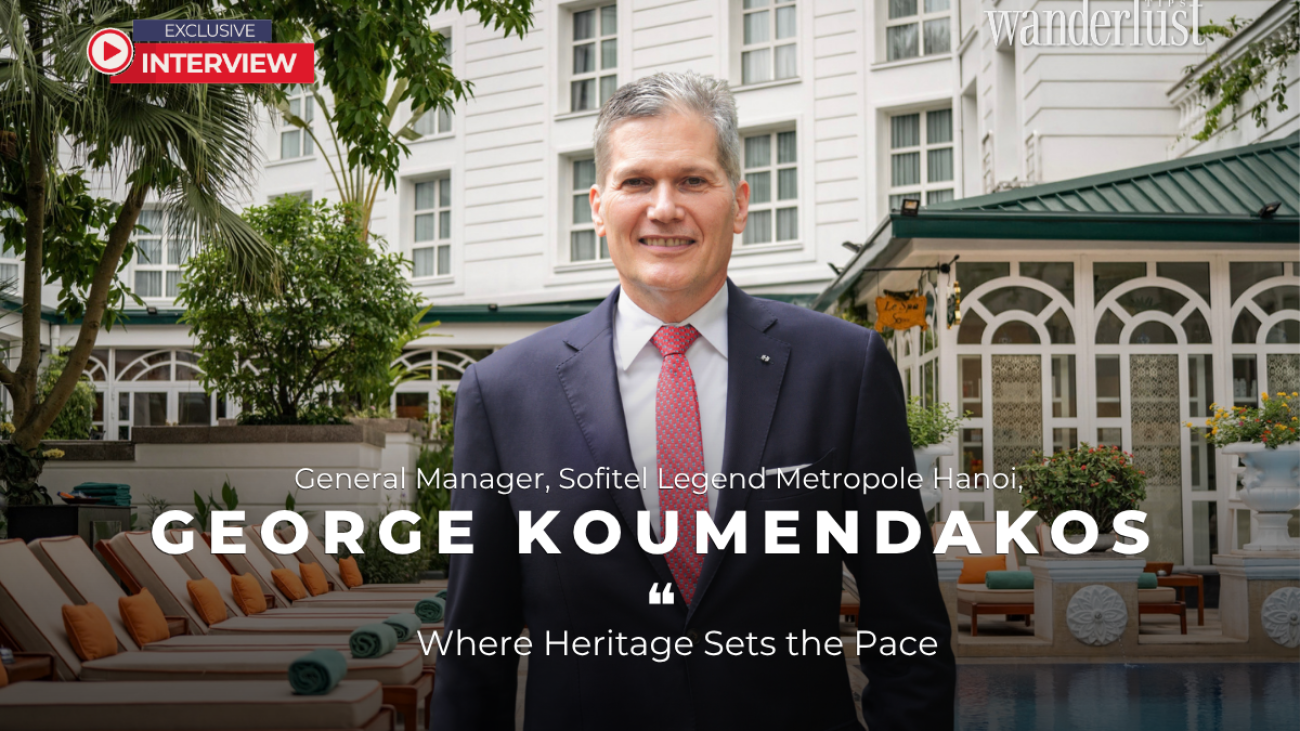
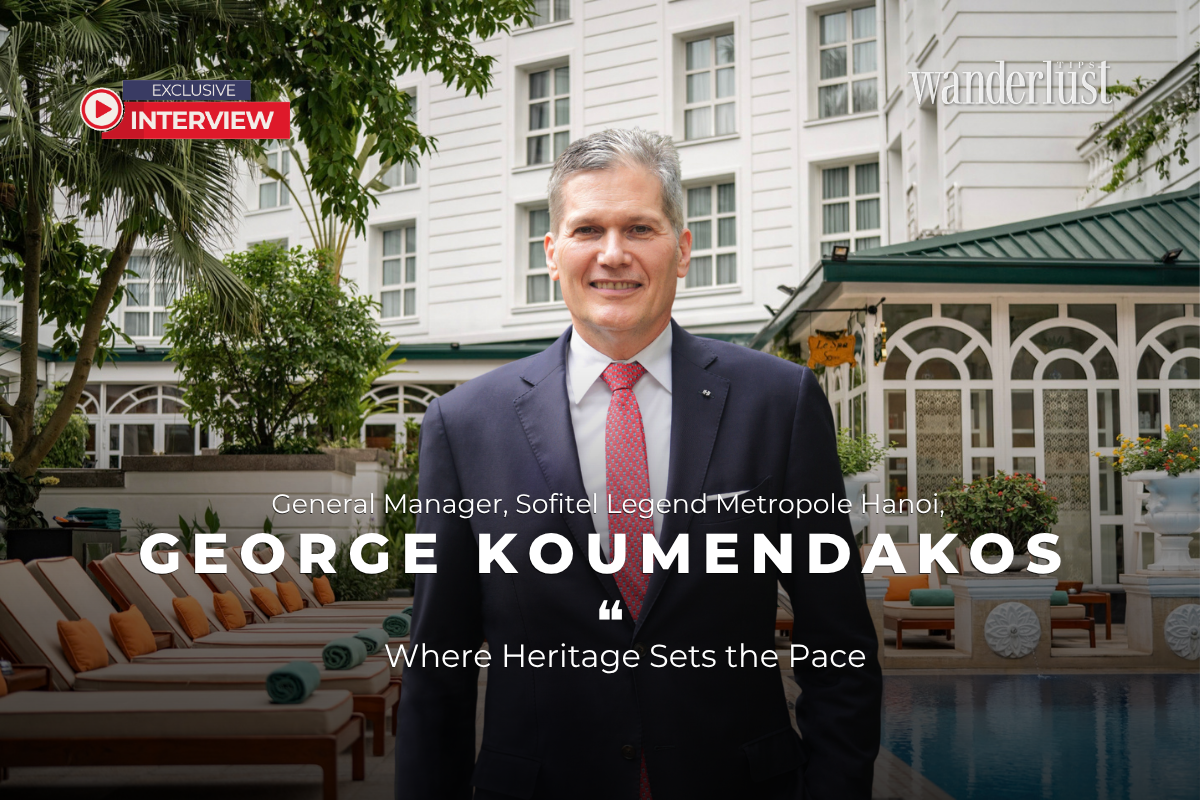
Where Heritage Sets the Pace at Sofitel Legend Metropole Hanoi

At 125 years old, Sofitel Legend Metropole Hanoi has never chased the city’s accelerating pace; it has simply held its own. In conversation with Wanderlust Tips, General Manager George Koumendakos traces the hotel’s philosophy of unhurried luxury, from the lacquer-inspired exhibition marking its anniversary to the quiet rituals, literary ghosts and wellness journeys that keep Sofitel Legend Metropole Hanoi a living witness to Hanoi’s history.

Dear Mr. Koumendakos, thank you for taking the time to speak with Wanderlust Tips at Sofitel Legend Metropole Hanoi. We are delighted to have you with us today.

Across 125 years, Sofitel Legend Metropole Hanoi has watched Hanoi transform around it, again and again. In a world that moves ever faster, what does the word “slow” still mean to hospitality today?

At first, “slow” may sound out of step with the times. But it does not mean being outdated. No matter how dynamic a city becomes, there will always be quieter moments within its rhythm. Hospitality is much the same.

Today, standards of luxury service are constantly rising. Brands in general, and the hospitality industry in particular, are quick to recognise new trends to meet guests’ growing expectations. Sustainability, for example, was once seen as an added value; today, it has become an essential standard for luxury hotels.

At Sofitel Legend Metropole Hanoi, I believe true luxury lies in the quality of attention given even to the smallest details. Rather than simply moving on, we take time to remember our guests’ preferences and stories, then turn that understanding into meaningful experiences. We do not rely on formula simply for efficiency. We welcome each guest as an individual. And rather than providing every piece of information through a digital screen, we still share in person the inspiring stories that have been passed down through generations of employees and guests over the past 125 years.

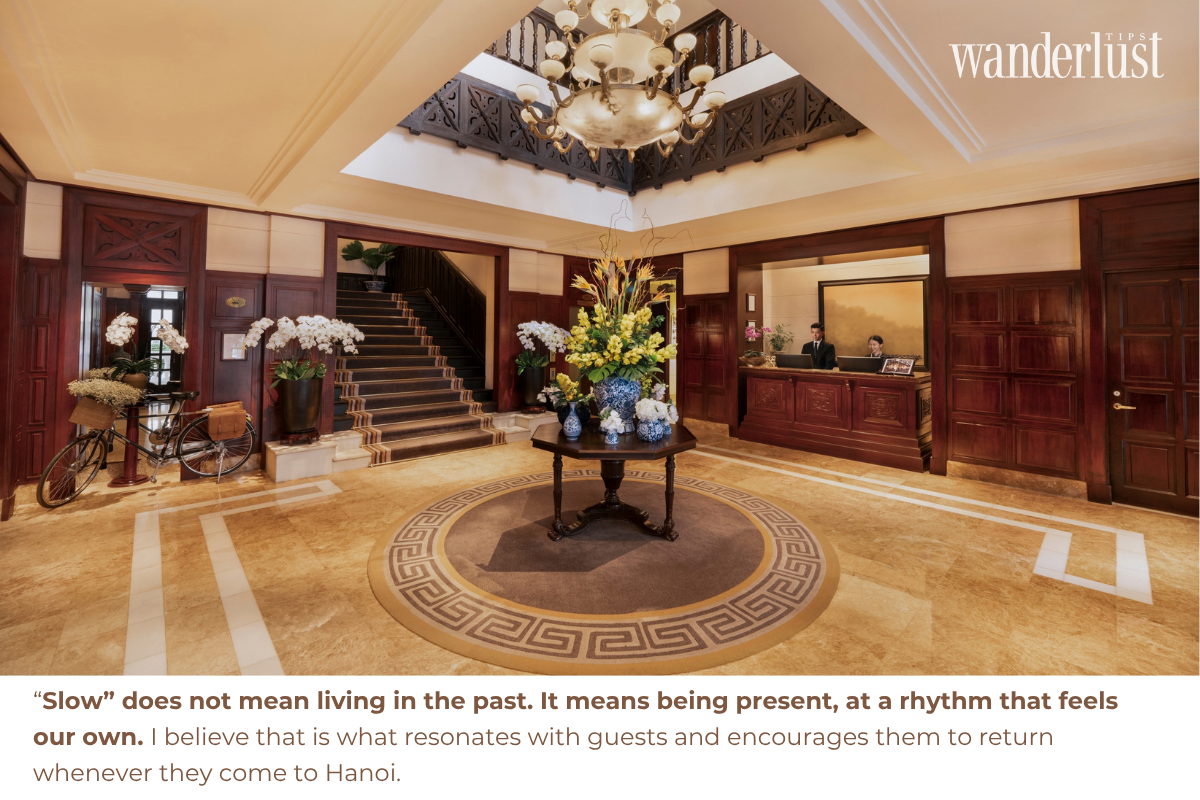
“Slow” does not mean living in the past. It means being present, at a rhythm that feels our own. I believe that is what resonates with guests and encourages them to return whenever they come to Hanoi.

For 125 years, Sofitel Legend Metropole Hanoi has been a place where guests can slow down and experience Hanoi more deeply through heritage, culinary, craftsmanship and human connection. As the city continues to evolve at great pace, our role is to preserve that sense of continuity: an elegant retreat where every experience is thoughtful, unhurried and memorable.

Lacquer is a material that rewards patience, artisans build and polish each layer over weeks before a piece is finished. In bringing “Indochina and After” into the hotel for its 125th anniversary, what parallels do you see between that rhythm and the way Sofitel Legend Metropole Hanoi itself has operated for more than a century?

Time is the most important catalyst in lacquer art. With traditional lacquer, there is no way to rush the process. The artist must wait for the right moment before moving on to the next stage, repeating the work over many days and months. The value of a piece lies not only in its final finish, but also in the layers that have been built up and polished with patience throughout the process.

I see many similarities with Sofitel Legend Metropole Hanoi’s own journey. Since its opening in 1901, the hotel has been shaped not only by its architecture or historic milestones, but also by layers of memories, the dedication of generations of employees, and the experiences created for guests across different periods.

We continue to renew ourselves for the way people live today, but always with respect for the values that have shaped our identity and given us such a strong foundation.

That is why “Indochina and After” is such a natural fit for Sofitel Legend Metropole Hanoi. The works by artists from the generation that followed the Indochina School of Fine Arts offer new perspectives on Vietnamese artistic and cultural roots through a contemporary visual language. In much the same way, Sofitel Legend Metropole Hanoi continues to preserve its timeless elegance and enduring heritage within contemporary life, while constantly pursuing excellence and developing increasingly personalised, elevated experiences for the future.

Of all the ways to mark a milestone as significant as 125 years, why did Sofitel Legend Metropole Hanoi choose art as its principal voice?

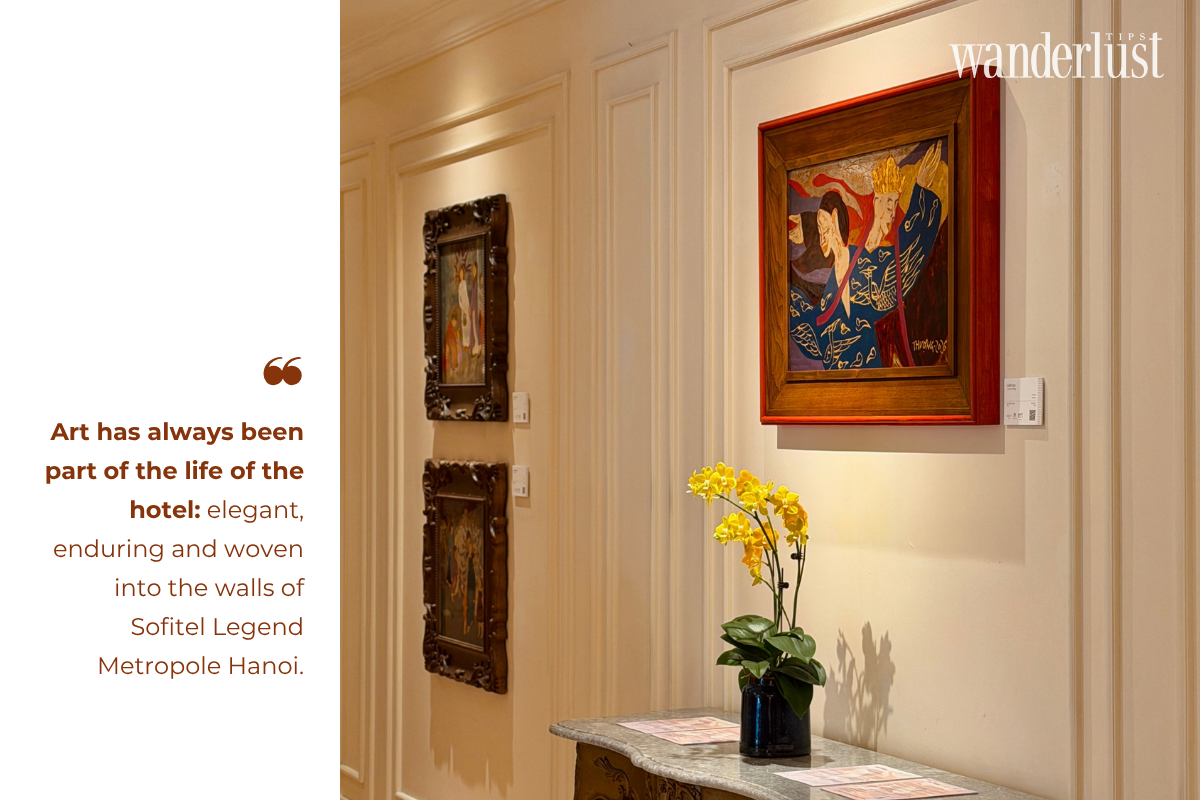
For 125 years, Sofitel Legend Metropole Hanoi has been more than a meeting place for business leaders, distinguished guests and heads of state. It has also been a place where history, culture and art naturally come together. Art has always been part of the life of the hotel: elegant, enduring and woven into its walls.

Here, experiences are delivered almost like inspired performances: multisensory, distinctive and never exactly the same. Our employees are not referred to in the conventional way; we call them Heartists: in other words, artists who act from the heart.

Art is practised here in many different forms. It is not only about viewing artworks. It can also be found in an exceptional culinary creation, in a musical moment, or in the graceful yet precise movements of our highly skilled spa therapists.

The Heritage Wing stands much as it did in 1901, while other spaces have been renewed for a contemporary sensibility. How do you hold that balance, so Sofitel Legend Metropole Hanoi remains a living embodiment of history without falling out of step with what today’s traveler expects?

We do not see the two wings as opposing worlds. Although they opened almost a century apart, guests can expect the same high level of comfort and service in either building.

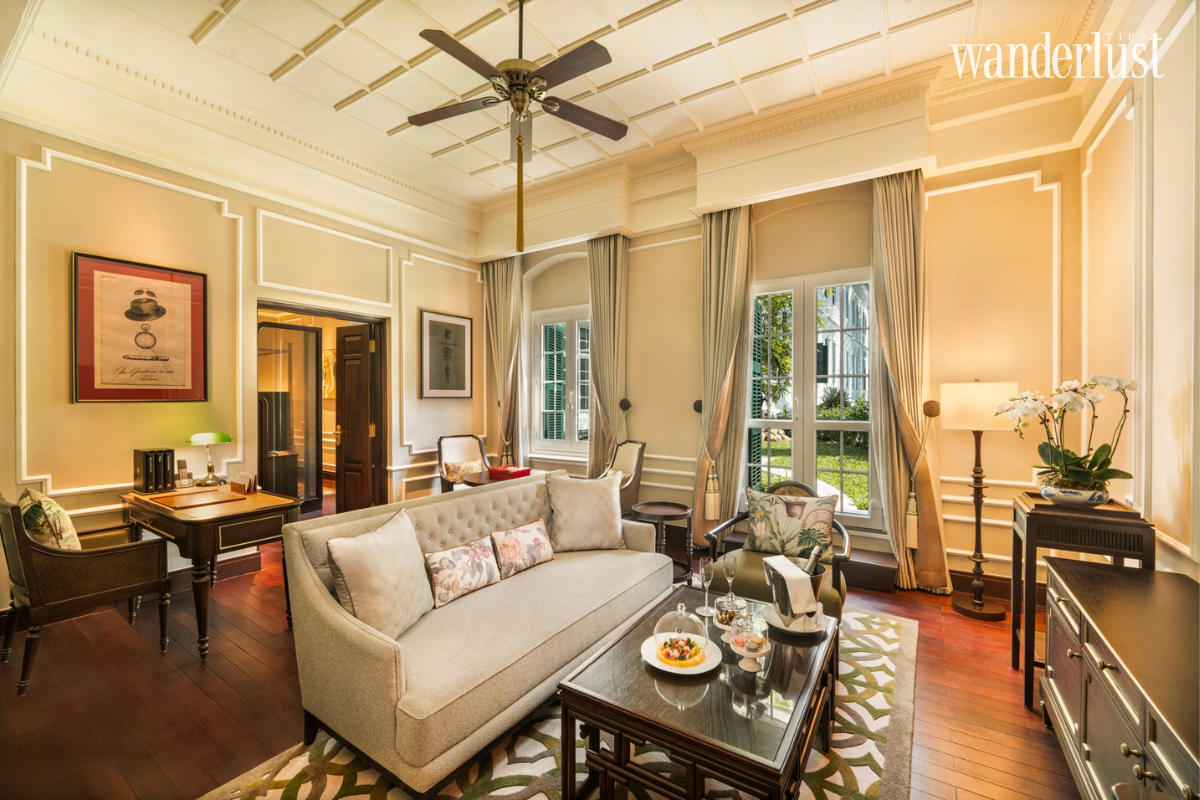
The Heritage Wing offers the warmth, classical character and nostalgia of the early twentieth century. The Opera Wing has a neo-classical identity, with brighter and more contemporary touches. Ultimately, it comes down to each guest’s personal preference.

Over the years, we have continued to invest in both spaces to ensure they remain comfortable and relevant for today’s travelers. In 2023, the Heritage Wing underwent an extensive refurbishment, with most furniture renewed and modern amenities introduced within its heritage setting. Coming soon, the Opera Wing guestrooms will also be refreshed, with improvements designed for contemporary lifestyles.

Beyond the facilities themselves, Sofitel Legend Metropole Hanoi’s distinctive culinary, cultural and musical programmes also make each stay feel individual and memorable.

An unhurried grace already seems woven into Sofitel Legend Metropole Hanoi’s rhythms, in the ritual of afternoon tea at Le Club Bar, in the quiet of the Bamboo Bar by the pool. Which of these rituals has the hotel held onto most closely as time has moved on?

French art de vivre, combined with Vietnamese hospitality, has been part of Sofitel Legend Metropole Hanoi’s rhythm for more than a century. We have small rituals that we maintain every day. They are not elaborate, but consistent: a warm “Bonjour” offered with a smile, the sound of the gong welcoming a new day, or the care and precision with which afternoon tea is served.

Over time, these rituals may be refreshed to meet the expectations of today’s guests. But the spirit of Sofitel Legend Metropole Hanoi remains unchanged: respect for our guests’ time and privacy, a celebration of refinement, and a desire to make every moment of a stay memorable.

The new “Sensations Orientales” journey at Le Spa du Metropole draws on Oriental tradition. How do you see the relationship between wellness and slow travel, now that so many guests choose to retreat not simply to be entertained, but to slow down?

Wellness and slow travel come together in one important way: both encourage guests to experience things more fully, without rushing and with greater depth. Today, many travelers no longer want a packed itinerary that feels like a checklist. Instead, they seek time to reconnect with themselves, restore their energy and connect more meaningfully with a destination.

With “Sensations Orientales,” Le Spa du Metropole offers an experience that goes beyond relaxation and invites each guest to engage all the senses. Inspired by Eastern and Western traditions, it combines acupressure treatments and sculpting techniques with fragrance, a slower rhythm and the tranquillity of the space.

For me, this is an important part of modern travel. It is not about experiencing the most in the least amount of time, but about giving more quality time to oneself and one’s companions: whether that means enjoying an energising breakfast beside a lush garden or spending an unhurried afternoon by the pool.

Charlie Chaplin, Graham Greene and Somerset Maugham all once stayed within these walls, figures whose lives were defined by reflection and creation. How does Sofitel Legend Metropole Hanoi keep that spirit alive, and pass it on to guests today?

The stories of the remarkable figures who have stayed here have always fascinated our visitors. Preserving and sharing them is not only a source of pride for generations of hotel employees; it is also a way of honouring the history that has shaped today’s Sofitel Legend Metropole Hanoi: a meeting place for those who appreciate culture, celebrate creativity and seek a deeper connection with Hanoi.

We continue to nurture that spirit through cultural, artistic and culinary experiences, so guests can learn about the past while also feeling the vitality of contemporary Hanoi. These stories are not presented as a history lesson. They are woven naturally into the everyday life of the hotel: through a refreshing Charlie Chaplin cocktail, or the Somerset Maugham Suite, with its intimate garden overlooking the lush grounds.

Most importantly, we want to create a space where every guest can slow down, observe and write their own story here. In that way, heritage is not simply remembered; it continues to live through each new generation of guests.

Much of luxury hospitality is racing to be the fastest, the newest, the most talked about. Sofitel Legend Metropole Hanoi has chosen a different path, positioning itself as a living witness to history. Do you see that as an increasingly rare choice, even a bold one, in today’s market?

I do not see this as a choice that goes against the times. I see it as a way for Sofitel Legend Metropole Hanoi to preserve its identity and distinction in a market with more and more options.

Trends certainly have their value, but they often change quickly. Authenticity and service quality, on the other hand, are values that endure. History belongs to the past, but heritage is something we carry into the present and develop for the future.

This approach requires consistency and long-term investment. But perhaps that is precisely what makes Sofitel Legend Metropole Hanoi different. We do not need to follow every new trend. Instead, we choose carefully how to evolve in a way that is right for the hotel, while safeguarding the timeless values that have defined us for 125 years.

Travelers today seem to want more than a quick check-in, they’re searching for something with real depth. Looking ahead, what role do you hope Sofitel Legend Metropole Hanoi will play in shaping the slow travel movement in Vietnam?

Today’s travelers are very well informed about the destinations they choose, through a wide range of channels and especially through the experiences shared by those who have travelled before them. Their expectations are therefore higher: not only in terms of service and facilities, but also for experiences that feel personal rather than standardised. This is both a challenge and a source of motivation for our industry.

Slow travel should not be seen as a complicated concept. As modern comforts become more complete, people naturally return to experiences that feel authentic, meaningful and connected to place.

We do not set out to define a trend. Our role is to create the right setting for guests who wish to experience Hanoi at a slower, more fulfilling pace.

Wanderlust Tips sincerely thanks you for sharing your valuable insights into the art of slow travel at Sofitel Legend Metropole Hanoi. We wish you and the Sofitel Legend Metropole Hanoi team continued success.

About Sofitel Legend Metropole Hanoi

A prominent fixture in the heart of Hanoi since 1901, Sofitel Legend Metropole Hanoi has a long tradition as a luxury venue for prestigious events and a popular rendezvous for business and leisure travelers such as playwrights, ambassadors, royalty and heads of state. Blending colonial heritage with neo-classical luxury and a dash of modernity, the hotel is the first Sofitel Legend in the world and the recipient of numerous international awards for its fine service and enchanting ambiance. This legendary landmark has contributed to the richness of local heritage.

EQ Kuala Lumpur’s Executive Chef and His Journey to Elevate Malaysian Cuisine

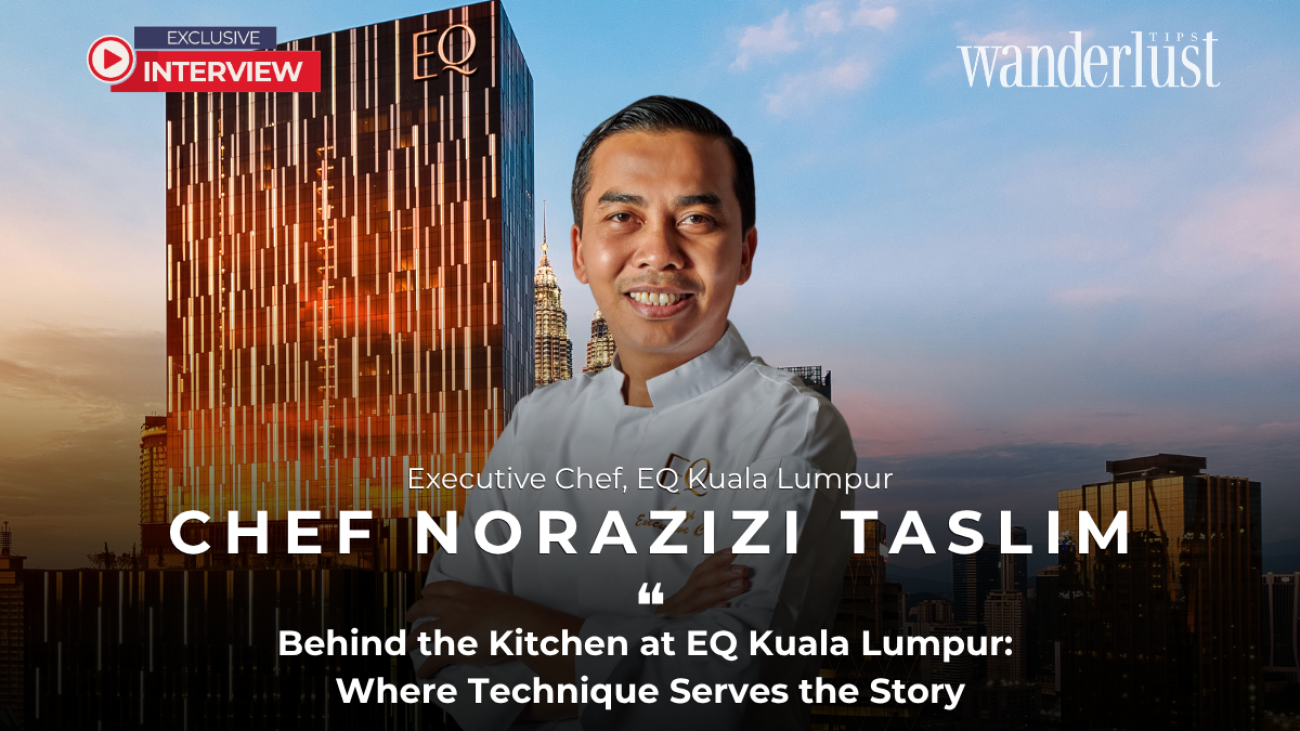
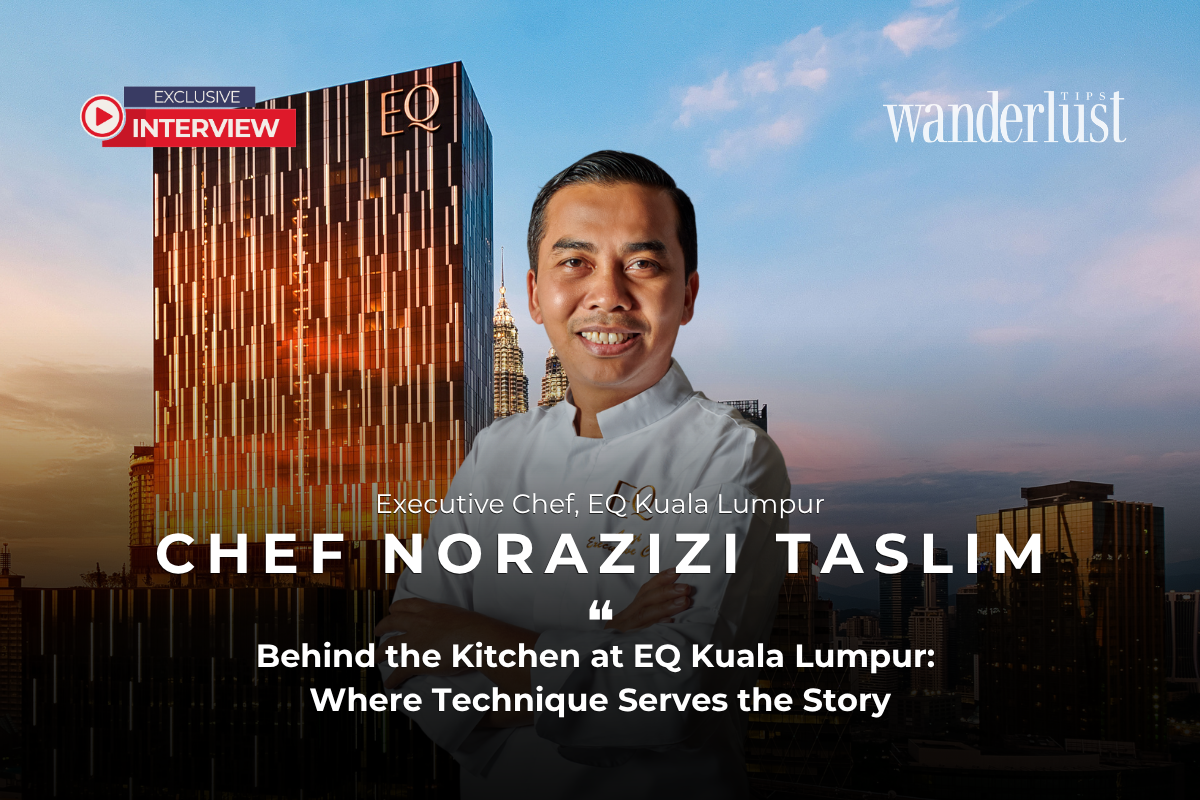
Executive Chef, EQ Kuala Lumpur

Chef Azizi and His Journey to Elevate Malaysian Cuisine

At EQ Kuala Lumpur, Executive Chef Norazizi Bin Taslim approaches Malaysian cuisine not as a tradition to be modernised, but as a story already complete in itself, one that only needs the right hand to carry it forward. In this instalment of Behind the Kitchen, Wanderlust Tips sits down with the chef behind the hotel’s culinary programme to discuss the discipline learned in Michelin-selected kitchens, the quiet partnership between European technique and Malay identity, and why he believes Malaysian fine dining has finally found the confidence to tell its own story.

Chef Azizi, thank you for taking the time to speak with Wanderlust Tips about the culinary vision behind EQ Kuala Lumpur, as part of our Behind the Kitchen feature. We are delighted to have you with us today.

You have spent much of your career championing Malaysian culinary heritage. Where did that passion begin, and what keeps it driving your work today?

The longer I spend in the kitchen, the more I realise that Malaysian food is not something we need to make complicated. The knowledge is already there. It comes from generations of people who understand ingredients, seasons, techniques and, most importantly, flavour. My appreciation for Malaysian cuisine grew as I progressed through my career and was exposed to different styles of cooking. Working with Western and French techniques gave me another perspective, and it made me appreciate our own cuisine even more. 

What keeps me interested is that there is always more to learn. Malaysian cuisine is incredibly diverse, and I believe we are still discovering how much potential it has. As chefs, our responsibility is to understand where our food comes from, respect its identity, and find the right way to bring it forward.

Of all the projects you have led throughout your career, which one do you feel best represents who you are as a chef, and why?

The experience that best represents who I am as a chef was the opportunity to lead and maintain the operations of a Michelin-selected restaurant. Maintaining that standard has taught me a lot about consistency. Anyone can have a good day in the kitchen. The real challenge is being able to deliver the same level of quality every day, with the same care and attention, regardless of how busy the operation is. It was also an important period for me because I was able to refine and improve our Malay cuisine while working within a very demanding culinary environment.

My collaborations with Michelin-starred chefs also gave me a different perspective. When you work alongside chefs who have reached that level, you realise that great cooking is not only about technique. It is about discipline, clarity and knowing exactly what you want the guest to experience. Those lessons have stayed with me.

When you are invited to craft a menu for a high-profile occasion, how do you approach the task of representing Malaysian cuisine to an audience that may be encountering it for the first time at that level?

I always start with the question: what do I want the guest to remember? If the guest is experiencing Malaysian cuisine for the first time, I want the flavours to be clear and honest. I do not think we should change Malaysian food simply to make it more familiar to an international audience. Instead, I look at the ingredient or dish and ask how we can present it with greater precision while allowing its character to remain. Technique is important, but it should support the ingredient rather than take over from it. Ultimately, I want the guest to discover something distinctly Malaysian. It may be a flavour they have never experienced before, but by the end of the meal, they should understand why it is special.

Malaysia’s food culture draws from so many traditions. How do you distill that richness into a coherent culinary identity on a single menu?

For me, it begins with having a clear point of view. Malaysia has so many culinary traditions that it would be impossible to represent everything on one menu. I prefer to identify the flavours, ingredients or techniques that best express the story we want to tell, and then build around those.

I also think it is important to understand the difference between preserving a dish and reinventing a dish. Not everything needs to be modernised. Some dishes have survived for generations because they already have a strong identity and a reason behind the way they are prepared. When we do introduce a new technique or presentation, I want it to have a purpose. The guest should still be able to recognise the soul of the dish. That balance is what makes Malaysian cuisine exciting to me.

Local ingredients are clearly central to your culinary vision. Can you walk us through how you find and build relationships with the producers behind your most important ingredients?

I believe you need to understand an ingredient before you can really cook with it. That means knowing where it comes from, how it is produced, when it is at its best and, sometimes, even understanding the challenges the producer faces. The relationship with the producer is important because it becomes a conversation rather than simply a transaction. When you have that understanding, you can make better decisions in the kitchen. It also gives us an opportunity as chefs to support local producers by giving their ingredients a platform. For me, an ingredient has a story before it reaches the kitchen. Our job is not to hide that story. It is to bring out the best of it.

At EQ Kuala Lumpur, the vision is to balance modern European technique with Malaysian culinary roots. In your kitchen, what does that balance look like in practice?

For me, technique is a tool. It is not the identity of the dish. My experience working in French brasserie and Western kitchens has given me a strong appreciation for precision, structure and technique. But when I apply those techniques to Malaysian cuisine, I always come back to the ingredient and the identity of the dish. We can refine a Malaysian dish through European techniques, but the flavour should still speak of Malaysia. 

I often think of it quite simply: the ingredient tells the Malaysian story; the technique helps us tell that story with greater precision. That is where I believe innovation becomes meaningful. We are not changing something simply to make it modern. We are finding a better way to express what is already there.

EQ Kuala Lumpur is recognised as one of the Best 10 Hotels in Malaysia. What role do you believe a strong culinary programme plays in building that kind of reputation for a hotel?

Food is one of the most personal parts of a hotel experience. A guest may remember the design of the hotel or the service they received, but food has a different way of staying with you. A particular flavour, a dish shared with family, or a meal enjoyed during an important occasion can become part of a memory. That is why I think a strong culinary programme is important to a hotel. It gives people another reason to come through the doors. It also gives the hotel a personality and a way to connect with the local community. But behind a strong culinary programme is a strong team. For me, it is not enough to create one great dish. We need to be able to deliver quality and consistency across the entire operation, every day.

Kuala Lumpur’s dining scene has grown significantly in recent years. Where do you see Malaysian fine dining heading, and what excites you most about that direction?

I think we are becoming more confident in telling our own story. For a long time, there was perhaps a tendency to look outside Malaysia for what fine dining should be. Today, I see more chefs asking a different question: how can we take what is already ours and present it at the highest level? That is an important change.

We have always had incredible food. What is evolving is our confidence in putting that food into a fine-dining context without feeling that we need to make it something else. A rendang is still a rendang. A local ingredient is still a local ingredient. What changes is our understanding of how we can present it. That is what excites me most, seeing Malaysian cuisine evolve while keeping its identity.

For a guest visiting EQ Kuala Lumpur for the first time, which dish on your menu would you recommend as the best introduction to your culinary philosophy, and why?

I would recommend our Short Rib Rendang Tok. For me, it represents what I believe modern Malaysian cooking can be. Rendang Tok has a very strong local identity. It has depth, richness and a history behind it. By working with short rib, we are able to bring another level of refinement to the dish while respecting the character of the traditional rendang. That is the approach I believe in. I am not interested in changing a dish simply for the sake of making it different. I want to understand what makes the original special first, and then see how we can give the guest a new experience without taking that away. If someone tastes the dish and still feels the soul of rendang, then we have achieved what we set out to do.

Looking ahead, what is the culinary experience you most want EQ Kuala Lumpur to be known for under your leadership?

I want EQ Kuala Lumpur to be known for a culinary programme that is diverse, consistent and genuinely thoughtful. But more importantly, I want it to be known for its people. I have spent many years working my way through different levels of the kitchen, and one thing I have learned is that every stage teaches you something. As a leader, I want to give my team that same opportunity to grow. I want my chefs to be confident in different styles of cuisine, but also confident enough to develop their own strengths and ideas. My role is not simply to tell them what to cook. It is to create the standards, give them the right direction and allow them to become better chefs.

Ultimately, I want guests to feel that there is thought behind everything we serve, from the ingredient we choose, to the technique we use, to the way the dish reaches the table. If we can make people curious about food, proud of Malaysian cuisine and happy to return to EQ Kuala Lumpur, then I think we are doing something right.

Wanderlust Tips sincerely thanks Chef Azizi for sharing his valuable insights into the culinary vision at EQ Kuala Lumpur. We wish him and the EQ Kuala Lumpur team continued success.

About EQ Kuala Lumpur

Celebrating its fifth decade in hospitality, EQ Kuala Lumpur brings together the enduring legacy of Hotel Equatorial with contemporary luxury in the heart of the city. The only property in Malaysia recognised among Travel + Leisure’s World’s 100 Best Hotels 2026, EQ Kuala Lumpur was ranked No. 27 in the World and No. 4 City Hotel in Asia.

Set within the iconic 52-storey Equatorial Plaza, the hotel features 440 elegantly appointed guestrooms and suites, exceptional dining and versatile event spaces. Highlights include Sky51, home to contemporary European restaurant Sabayon and rooftop bar Blue, with panoramic views across Kuala Lumpur. Guests can also enjoy Sanctum Wellness, a 25-metre infinity pool, Vitality Jacuzzi® and state-of-the-art fitness centre. GBI Gold-certified, EQ Kuala Lumpur combines thoughtful hospitality, wellbeing and sustainability for a distinctly Kuala Lumpur experience.

Chef Lan Nguyen: Western Technique, Central Vietnamese Flavor

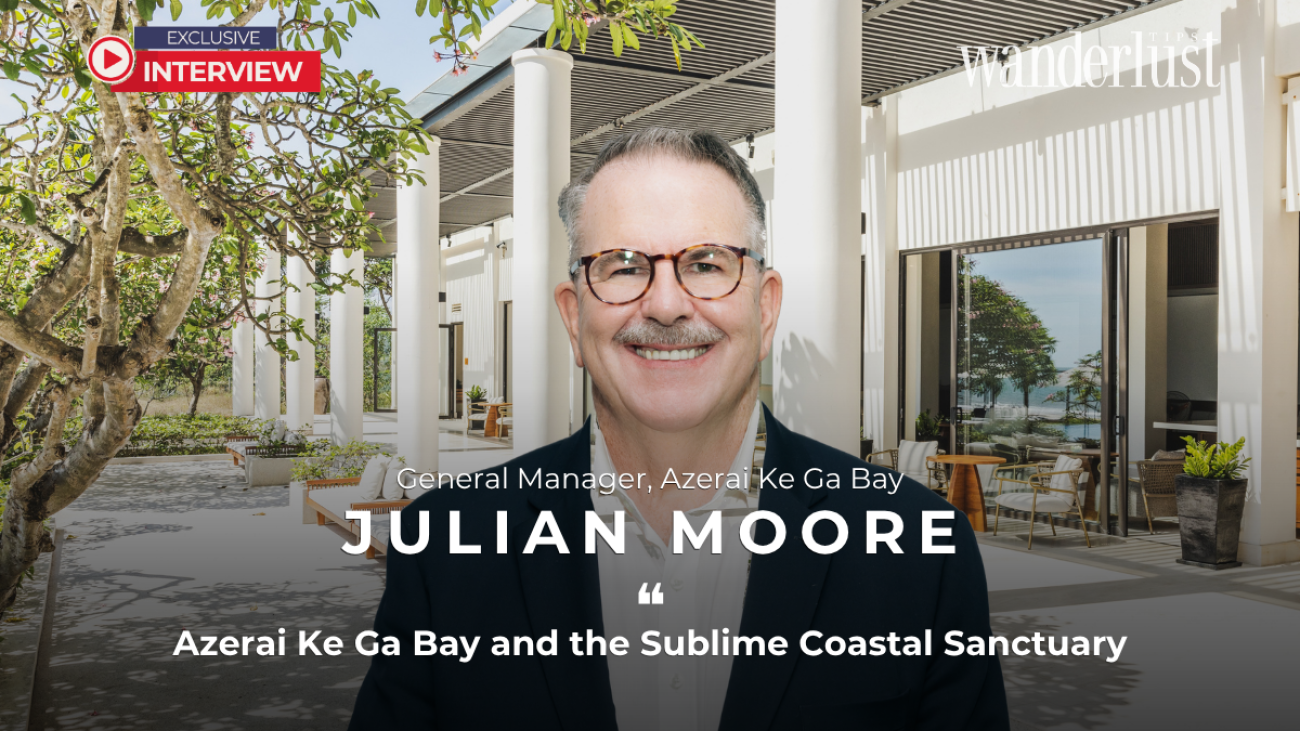
Azerai Ke Ga Bay and the Sublime Coastal Sanctuary

Along the wind-carved curve of Ke Ga Bay, Azerai Ke Ga Bay does not stage its stillness, it simply steps back and lets an untouched coastline, a fisherman’s tide and centuries-old banyan roots set the pace. In conversation with Wanderlust Tips,, General Manager Julian Moore reflects on a philosophy built into every villa, treatment and shared meal, and on why real rest, here, is offered rather than programmed.

Wanderlust Tips warmly thanks Julian Moore, General Manager of Azerai Ke Ga Bay, for taking the time to speak with us about the art of slow travel, as part of our special feature, The Art of Slow Travel. We are delighted to share his reflections below.

The ‘Slow Travel’ trend is more than simply travelling at a leisurely pace; it is about establishing a deep connection with the resort environment. How does Azerai Ke Ga Bay weave this philosophy into its architecture and landscape design to create an immediate sense of relaxation upon arrival?

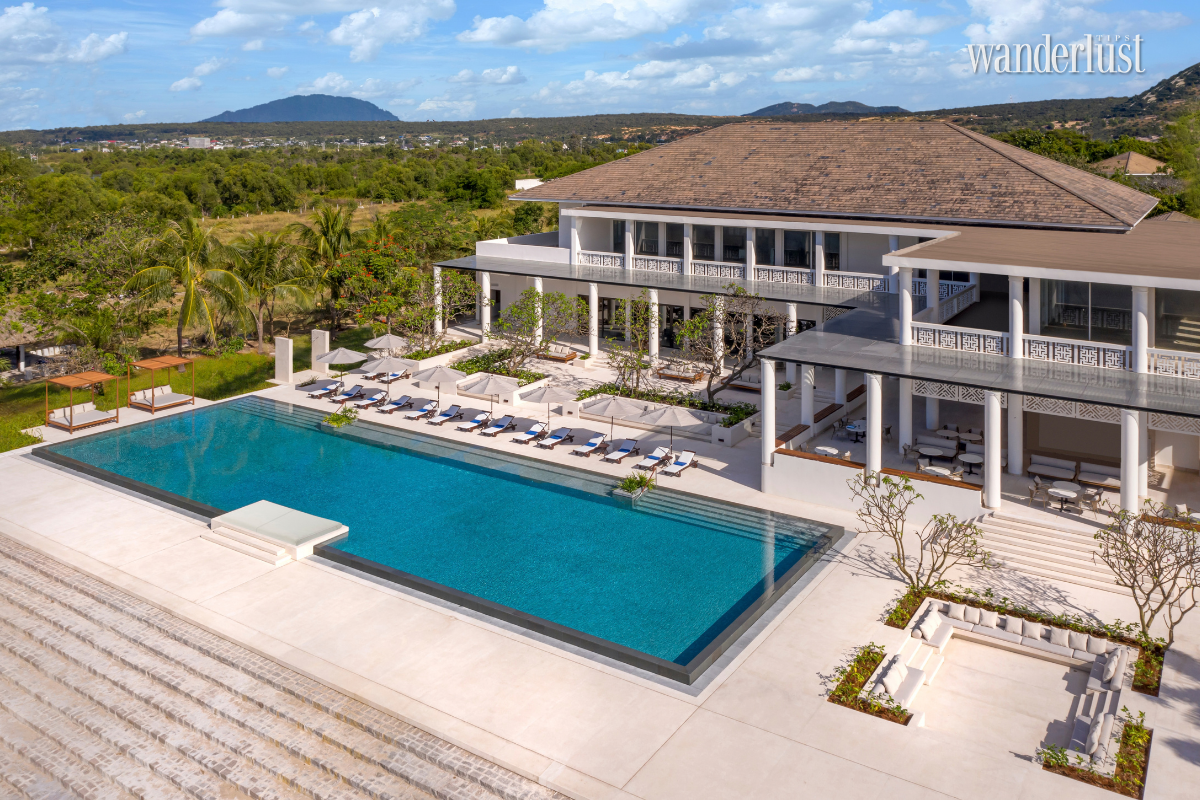
Guest consideration in architecture and landscaping is often set aside in favour of design and visual impact alone. In creating Azerai Ke Ga Bay, our founder was instead driven by the guest’s perspective, using this to shape an impactful architectural design supported by a sympathetic, soothing natural landscape that fully showcases our location. The modern world, by its nature, can be confronting, and in creating the Azerai Ke Ga Bay product, we sought a seamless integration between nature and design, embracing rather than confronting guests, to address our shared need for consideration and care. We view our resort as a large contemporary residence where guests join our community and share our destination. This approach allows guests to fully relax in a safe and secure space, made possible through experience-led design, lush yet tailored gardens echoing the beauty and majesty of the tropics, and a discreet floral theme in green and white throughout to soothe the eye. The interior colour palette has been inspired by our destination, mirroring gentle browns, natural wood finishes, sand-coloured furnishings and hints of the orange hues of iron seen in the neighbouring beach monoliths. The interior decorations, in turn, have been inspired by the roots of the banyan tree, the leaves of the resort’s plants and the fishermen’s nets of the local village.

Amid the fast pace of modern life, what elements at Azerai Ke Ga Bay enable guests to truly ‘slow down’ and disconnect from daily stress?

Azerai Ke Ga Bay’s original owner was inspired to create a unique architectural style for each of the resort’s three zones, and this has proven to contribute significantly to guest relaxation. Discovering the shift between each design as you arrive engages the creative rather than the organising mind, moving you into a new space where the rhythm of the trees in the wind, the dappled sunlight along the Ginger Forest Walk, and the shadows on the villas by night each set the tone for calm. This is further enhanced by contemporary sofas dotted throughout the resort, where guests relax, take in a view, read a book, or simply share time together. This ease of resort living, moving from handcrafted games to an al fresco lunch overlooking the bay, to lazing by the pool or nestling on an outdoor sofa while gazing across the ocean as sunset lights the lighthouse or the sand dunes, combined with the warmth of our team, quickens the process of slowing down.

Which specific wellness treatments or activities at Azerai Ke Ga Bay are tailored to maximise the ‘Slow Travel’ experience for guests?

Recognising that the slow travel experience is personal to every guest, we provide a diverse range of wellness options. Those seeking inner calm may explore different styles of yoga, soothing and nurturing body treatments, or even spend time in our fitness, sauna and steam facilities.

For those desiring a deeper experience, we recommend our personalised meditation, breathwork or tailored yoga sessions. These are offered in yoga studios with the comfort of air-conditioning or the freshness of ocean air, according to guest preference, each overlooking the waters of Ke Ga Bay. Guests are invited to guide the approach that best assists them in achieving their own goals, whether to reset, relax or reconnect.

How does Azerai Ke Ga Bay weave local cultural elements, such as Binh Thuan cuisine, fishing villages and the Ke Ga Lighthouse, into its offering to create a meaningful, immersive journey?

Azerai Ke Ga Bay has developed close relationships with the dragon fruit and salt farmers of the region, with tours guided by a member of our own team for whom Ke Ga township is home. Local elements are also strongly woven into our own offerings, with our team leading private local fishing experiences where guests learn the philosophy and skills used by the fishermen of our nearby village. This private experience focuses on two traditional local fishing styles: net fishing and basket boat fishing. We also witness regular community activity on the beach in front of the resort, where local net and basket fishermen work the hotel’s shoreline, a community fishing event takes place once a year when the bait fish arrive, and each day a farmer moves his cattle past the resort to graze further along the beach. This everyday animation, blended with the rhythmic sway of the boats in the bay, lulls guests into a calm mood as they enjoy breakfast on the terrace.

Gastronomy plays a vital role in slow travel. How does the culinary philosophy at Azerai Ke Ga Bay’s dining outlets celebrate local ingredients and encourage a more mindful style of dining?

Vietnam has a culture of unique regional dining, from north to south. Our community enjoys southern Vietnamese cuisine, and we use regional produce, local fish and seafood wherever possible, to continue to showcase and support this region. Our chef has lived in this area since the age of five and knows the dishes intimately, enabling him to produce truly authentic Vietnamese dishes for the enjoyment of international travellers and locals alike. Experiencing the dining styles of each region of Vietnam offers a deeper understanding of the history and cultural influences that shaped its style and its people. This is shared with guests as part of the individual cooking classes held with our resort chef.

In Azerai Ke Ga Bay’s observation, which guest demographics are currently seeking ‘Slow Travel’ experiences the most, and how have their holiday habits evolved?

Our slow travel market sits within the 30-50 age demographic, made up of individuals in high-responsibility roles or intense work and living environments who are seeking a reset. This market is growing significantly as the world becomes more demanding and individuals become more reliant on technology. The speed of day-to-day life and work creates tension within many people and motivates them to seek a retreat from the noise, and to rebalance, while on vacation. Our offering suits this need extremely well, as we do not programme our guests but instead offer a selection of experiences for them to enjoy, letting them choose how, or whether, they would like to take part.

Some travellers worry that slow travel might feel monotonous. How does Azerai Ke Ga Bay strike a balance between tranquillity and engaging guest experiences?

This is a contrast often experienced by couples, where one seeks peace and the other activity. In this situation, we take the approach of ensuring both needs are met within the resort’s offering. Tranquility offerings range from spa and wellness to culinary experiences, while those seeking more engaging experiences can travel to historical sites, discover the giant sand dunes, engage with the community, or learn more about local culture through immersive fishing experiences or village walks.

How does Azerai Ke Ga Bay integrate sustainability and coastal environmental protection into its operational practices?

Azerai Ke Ga Bay embraces coastal protection and actively maintains our beachfront daily, and we have also invested in building a seawall to minimise historical beach erosion. Sustainability is a critical consideration across all of our operational practices. Our design approach uses open layouts in many public spaces to embrace natural airflow, and wide awnings to reduce cooling energy usage. We also maintain our own on-property solar farm, which supports our demand for generator-based energy. We sterilise and bottle high-quality filtered water in recyclable glass bottles, limit non-essential lighting pollution to maximise the enjoyment of the night sky, and remove forever plastics from day-to-day operations. We are also committed to sourcing our recruitment locally wherever possible, and 95% of our team is from our own province, ensuring that the income generated returns, where possible, to our home community.

What role do local team members play in delivering authentic hospitality and a sense of serenity to guests at Azerai Ke Ga Bay?

Our team members are really the key to the Azerai Ke Ga Bay experience. They are people from our community and province who can share their own experiences of living and growing up in this location. This is embraced strongly by our international guests, as it fuels their quest to gain a better understanding of modern Vietnam. Being in a regional area, our team are open and friendly, as is so often the case with people from rural regions around the world. They are warmly welcoming to guests and take a genuine interest in them, creating a strong bond. In shaping our service standards during training, we embraced this humanity and individuality in their interactions, enabling our team to communicate in their own authentic style.

If Azerai Ke Ga Bay could use just three words to describe the ultimate ‘Slow Travel’ experience at the resort, which words would be chosen, and why?

‘Calming’, as our design scheme sits naturally within its surrounding environment, limiting sharp contrasts so the experience flows without interruption.

‘Renewing’, as guests can renew physically through a relaxed and open service approach with high standards throughout. Our experience also offers ways to fuel the body, nurture the soul with nature, and use wellness practices to clear the mind.

And ‘Connecting’: a calm mind paired with a restored body allows guests to relax and engage more fully, opening the way to new levels of interest and curiosity.

Wanderlust Tips sincerely thanks Julian Moore for sharing these valuable insights into the art of slow travel at Azerai Ke Ga Bay. We wish him and the entire team continued success.

Chef Lan Nguyen: Western Technique, Central Vietnamese Flavor