

At EQ Kuala Lumpur, Executive Chef Norazizi Bin Taslim approaches Malaysian cuisine not as a tradition to be modernised, but as a story already complete in itself, one that only needs the right hand to carry it forward. In this instalment of Behind the Kitchen, Wanderlust Tips sits down with the chef behind the hotel’s culinary programme to discuss the discipline learned in Michelin-selected kitchens, the quiet partnership between European technique and Malay identity, and why he believes Malaysian fine dining has finally found the confidence to tell its own story.
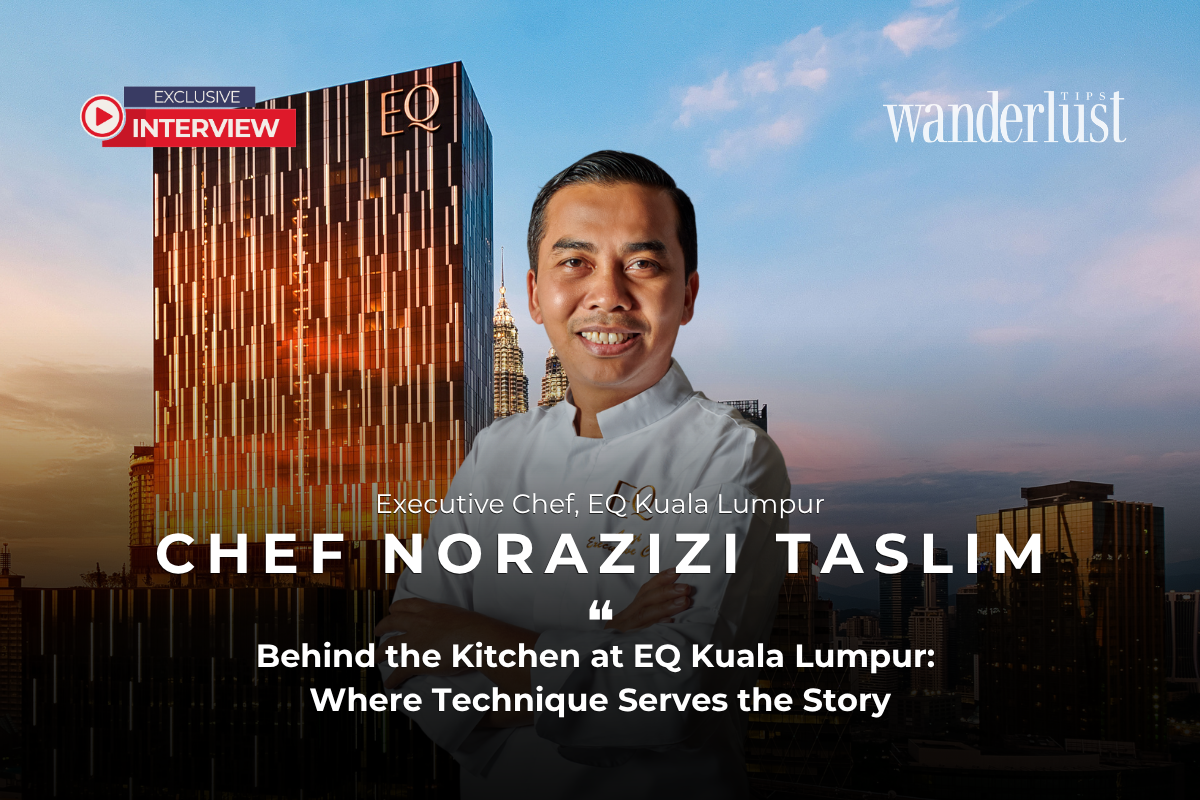 Chef Azizi, thank you for taking the time to speak with Wanderlust Tips about the culinary vision behind EQ Kuala Lumpur, as part of our Behind the Kitchen feature. We are delighted to have you with us today.
You have spent much of your career championing Malaysian culinary heritage. Where did that passion begin, and what keeps it driving your work today?
The longer I spend in the kitchen, the more I realise that Malaysian food is not something we need to make complicated. The knowledge is already there. It comes from generations of people who understand ingredients, seasons, techniques and, most importantly, flavour. My appreciation for Malaysian cuisine grew as I progressed through my career and was exposed to different styles of cooking. Working with Western and French techniques gave me another perspective, and it made me appreciate our own cuisine even more.
What keeps me interested is that there is always more to learn. Malaysian cuisine is incredibly diverse, and I believe we are still discovering how much potential it has. As chefs, our responsibility is to understand where our food comes from, respect its identity, and find the right way to bring it forward.

Of all the projects you have led throughout your career, which one do you feel best represents who you are as a chef, and why?
The experience that best represents who I am as a chef was the opportunity to lead and maintain the operations of a Michelin-selected restaurant. Maintaining that standard has taught me a lot about consistency. Anyone can have a good day in the kitchen. The real challenge is being able to deliver the same level of quality every day, with the same care and attention, regardless of how busy the operation is. It was also an important period for me because I was able to refine and improve our Malay cuisine while working within a very demanding culinary environment.
My collaborations with Michelin-starred chefs also gave me a different perspective. When you work alongside chefs who have reached that level, you realise that great cooking is not only about technique. It is about discipline, clarity and knowing exactly what you want the guest to experience. Those lessons have stayed with me.
When you are invited to craft a menu for a high-profile occasion, how do you approach the task of representing Malaysian cuisine to an audience that may be encountering it for the first time at that level?
I always start with the question: what do I want the guest to remember? If the guest is experiencing Malaysian cuisine for the first time, I want the flavours to be clear and honest. I do not think we should change Malaysian food simply to make it more familiar to an international audience. Instead, I look at the ingredient or dish and ask how we can present it with greater precision while allowing its character to remain. Technique is important, but it should support the ingredient rather than take over from it. Ultimately, I want the guest to discover something distinctly Malaysian. It may be a flavour they have never experienced before, but by the end of the meal, they should understand why it is special.
Malaysia’s food culture draws from so many traditions. How do you distill that richness into a coherent culinary identity on a single menu?
For me, it begins with having a clear point of view. Malaysia has so many culinary traditions that it would be impossible to represent everything on one menu. I prefer to identify the flavours, ingredients or techniques that best express the story we want to tell, and then build around those.
I also think it is important to understand the difference between preserving a dish and reinventing a dish. Not everything needs to be modernised. Some dishes have survived for generations because they already have a strong identity and a reason behind the way they are prepared. When we do introduce a new technique or presentation, I want it to have a purpose. The guest should still be able to recognise the soul of the dish. That balance is what makes Malaysian cuisine exciting to me.
Local ingredients are clearly central to your culinary vision. Can you walk us through how you find and build relationships with the producers behind your most important ingredients?
I believe you need to understand an ingredient before you can really cook with it. That means knowing where it comes from, how it is produced, when it is at its best and, sometimes, even understanding the challenges the producer faces. The relationship with the producer is important because it becomes a conversation rather than simply a transaction. When you have that understanding, you can make better decisions in the kitchen. It also gives us an opportunity as chefs to support local producers by giving their ingredients a platform. For me, an ingredient has a story before it reaches the kitchen. Our job is not to hide that story. It is to bring out the best of it.
At EQ Kuala Lumpur, the vision is to balance modern European technique with Malaysian culinary roots. In your kitchen, what does that balance look like in practice?
For me, technique is a tool. It is not the identity of the dish. My experience working in French brasserie and Western kitchens has given me a strong appreciation for precision, structure and technique. But when I apply those techniques to Malaysian cuisine, I always come back to the ingredient and the identity of the dish. We can refine a Malaysian dish through European techniques, but the flavour should still speak of Malaysia.
I often think of it quite simply: the ingredient tells the Malaysian story; the technique helps us tell that story with greater precision. That is where I believe innovation becomes meaningful. We are not changing something simply to make it modern. We are finding a better way to express what is already there.

EQ Kuala Lumpur is recognised as one of the Best 10 Hotels in Malaysia. What role do you believe a strong culinary programme plays in building that kind of reputation for a hotel?
Food is one of the most personal parts of a hotel experience. A guest may remember the design of the hotel or the service they received, but food has a different way of staying with you. A particular flavour, a dish shared with family, or a meal enjoyed during an important occasion can become part of a memory. That is why I think a strong culinary programme is important to a hotel. It gives people another reason to come through the doors. It also gives the hotel a personality and a way to connect with the local community. But behind a strong culinary programme is a strong team. For me, it is not enough to create one great dish. We need to be able to deliver quality and consistency across the entire operation, every day.
Kuala Lumpur’s dining scene has grown significantly in recent years. Where do you see Malaysian fine dining heading, and what excites you most about that direction?
I think we are becoming more confident in telling our own story. For a long time, there was perhaps a tendency to look outside Malaysia for what fine dining should be. Today, I see more chefs asking a different question: how can we take what is already ours and present it at the highest level? That is an important change.
We have always had incredible food. What is evolving is our confidence in putting that food into a fine-dining context without feeling that we need to make it something else. A rendang is still a rendang. A local ingredient is still a local ingredient. What changes is our understanding of how we can present it. That is what excites me most, seeing Malaysian cuisine evolve while keeping its identity.

For a guest visiting EQ Kuala Lumpur for the first time, which dish on your menu would you recommend as the best introduction to your culinary philosophy, and why?
I would recommend our Short Rib Rendang Tok. For me, it represents what I believe modern Malaysian cooking can be. Rendang Tok has a very strong local identity. It has depth, richness and a history behind it. By working with short rib, we are able to bring another level of refinement to the dish while respecting the character of the traditional rendang. That is the approach I believe in. I am not interested in changing a dish simply for the sake of making it different. I want to understand what makes the original special first, and then see how we can give the guest a new experience without taking that away. If someone tastes the dish and still feels the soul of rendang, then we have achieved what we set out to do.
Looking ahead, what is the culinary experience you most want EQ Kuala Lumpur to be known for under your leadership?
I want EQ Kuala Lumpur to be known for a culinary programme that is diverse, consistent and genuinely thoughtful. But more importantly, I want it to be known for its people. I have spent many years working my way through different levels of the kitchen, and one thing I have learned is that every stage teaches you something. As a leader, I want to give my team that same opportunity to grow. I want my chefs to be confident in different styles of cuisine, but also confident enough to develop their own strengths and ideas. My role is not simply to tell them what to cook. It is to create the standards, give them the right direction and allow them to become better chefs.
Ultimately, I want guests to feel that there is thought behind everything we serve, from the ingredient we choose, to the technique we use, to the way the dish reaches the table. If we can make people curious about food, proud of Malaysian cuisine and happy to return to EQ Kuala Lumpur, then I think we are doing something right.
Wanderlust Tips sincerely thanks Chef Azizi for sharing his valuable insights into the culinary vision at EQ Kuala Lumpur. We wish him and the EQ Kuala Lumpur team continued success.
About EQ Kuala Lumpur
Celebrating its fifth decade in hospitality, EQ Kuala Lumpur brings together the enduring legacy of Hotel Equatorial with contemporary luxury in the heart of the city. The only property in Malaysia recognised among Travel + Leisure’s World’s 100 Best Hotels 2026, EQ Kuala Lumpur was ranked No. 27 in the World and No. 4 City Hotel in Asia.
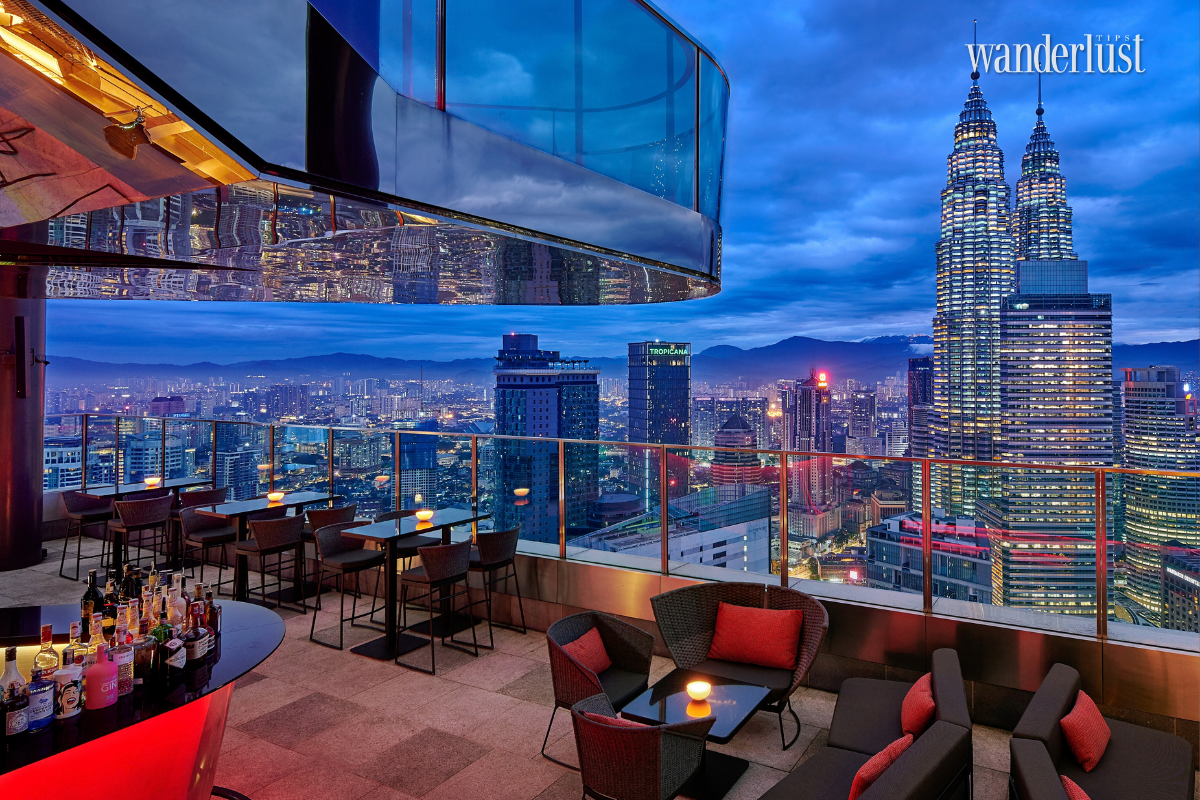
Set within the iconic 52-storey Equatorial Plaza, the hotel features 440 elegantly appointed guestrooms and suites, exceptional dining and versatile event spaces. Highlights include Sky51, home to contemporary European restaurant Sabayon and rooftop bar Blue, with panoramic views across Kuala Lumpur. Guests can also enjoy Sanctum Wellness, a 25-metre infinity pool, Vitality Jacuzzi® and state-of-the-art fitness centre. GBI Gold-certified, EQ Kuala Lumpur combines thoughtful hospitality, wellbeing and sustainability for a distinctly Kuala Lumpur experience.
Chef Lan Nguyen: Western Technique, Central Vietnamese Flavor