

If the Itamae dedicates his life and soul to curating a flawless Omakase experience, then the presence of an enlightened guest is the final, essential brushstroke on that masterpiece. Omakase is a profound, silent dialogue between chef and guest.
Understanding the unwritten etiquette of the sushi counter not only elevates your personal stature but acts as a master key, often unlocking “off-menu” treasures and personalized attention from the chef. Here is your guide to the refined etiquette that will help you master the art of the Omakase counter.
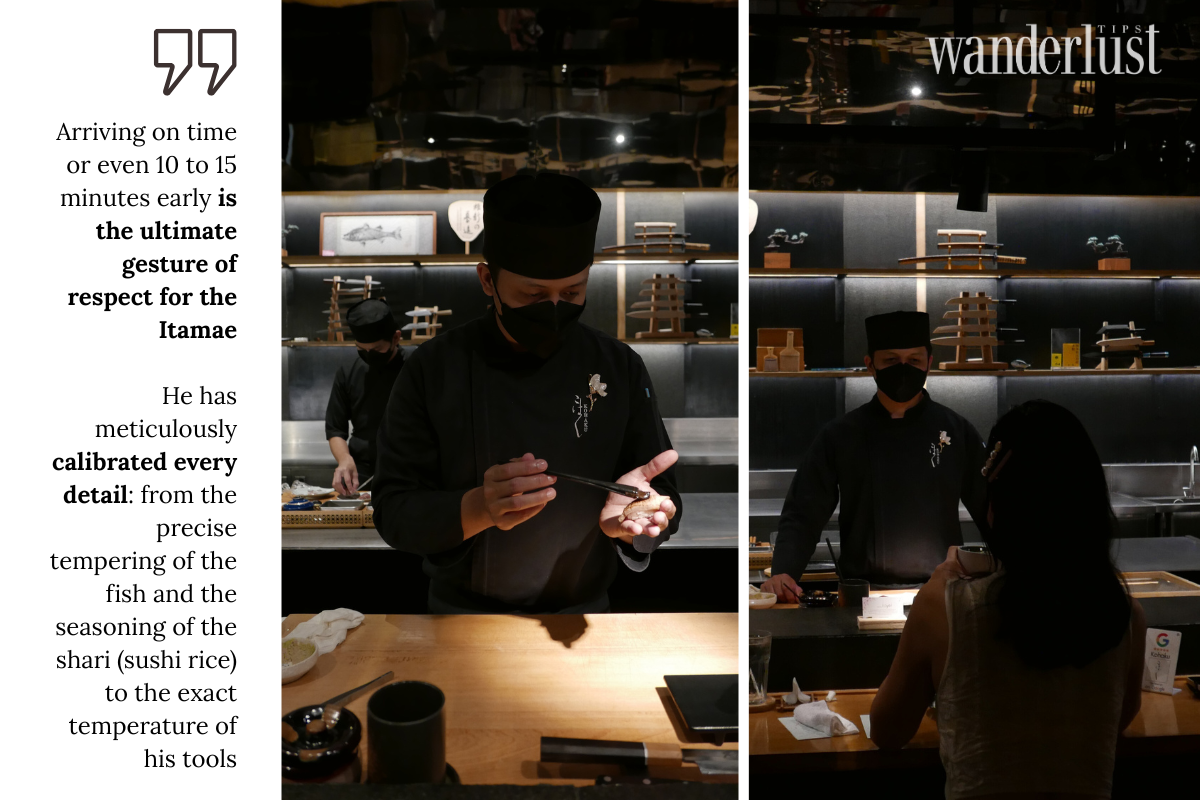
Punctuality: A Supreme Respect for “Timing”
In Japanese culinary arts, time is the heartbeat of the experience. Unlike a standard restaurant where arrivals are fluid, an Omakase session operates on a strict, synchronized rhythm for a limited group (typically 6–12 guests). Arriving on time or even 10 – 15 minutes early is a profound gesture of respect for the Itamae. He has meticulously calculated the timing for tempering fish, vinegared rice, and warming utensils. A late arrival disrupts the delicate flow of the entire counter, causing you to miss the “golden window” where the fish is at its peak temperature and texture.
The Art of the Bite: Don’t Let It Linger
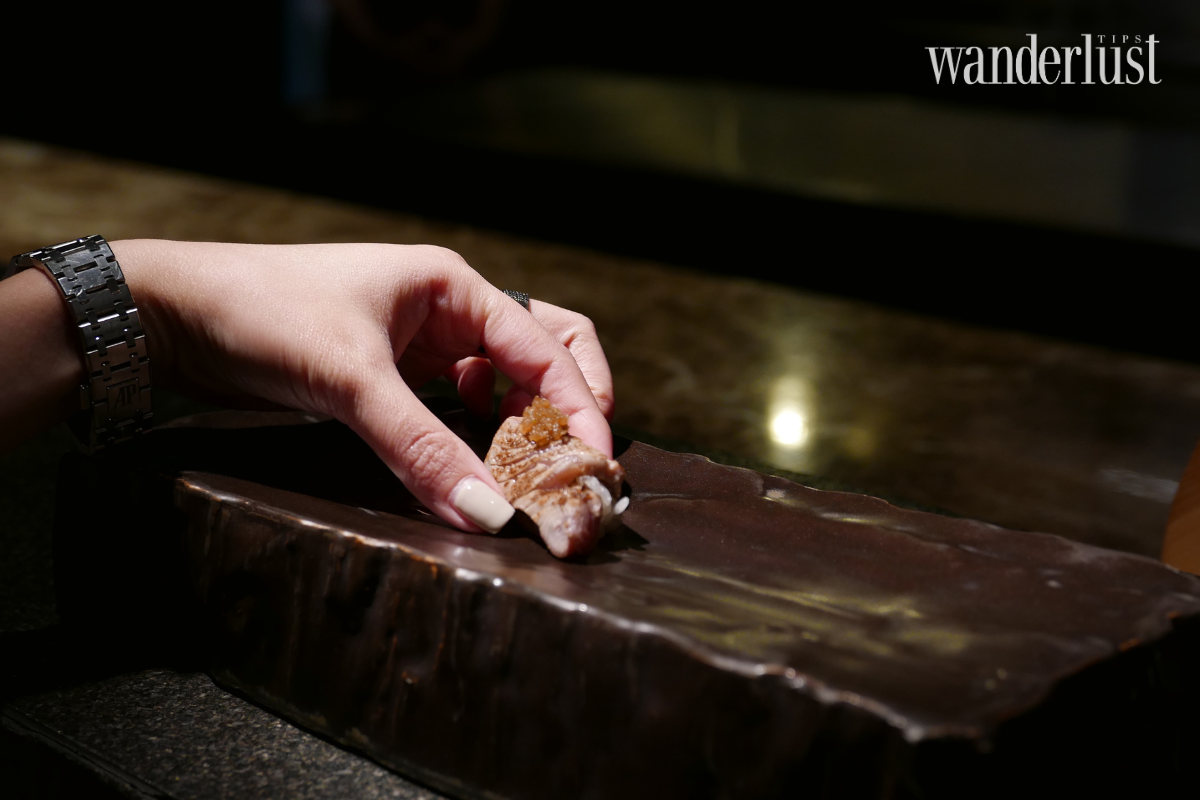
The moment the Itamae places a piece of nigiri on your ceramic plate, it is at its zenith: the rice at body temperature, the structure aerated, and the fish at its peak moisture.
- The 15-Second Rule: Indulge within 10 to 15 seconds. Lingering over photos or conversation allows the rice to cool, harden, and lose its natural, airy cohesion.
- One-Bite Perfection: Consume the nigiri in a single bite to allow the layered harmony of fish, rice, vinegar, and wasabi to unfold in unison. Dividing a piece of sushi is seen as dismantling the architecture of the chef’s work.
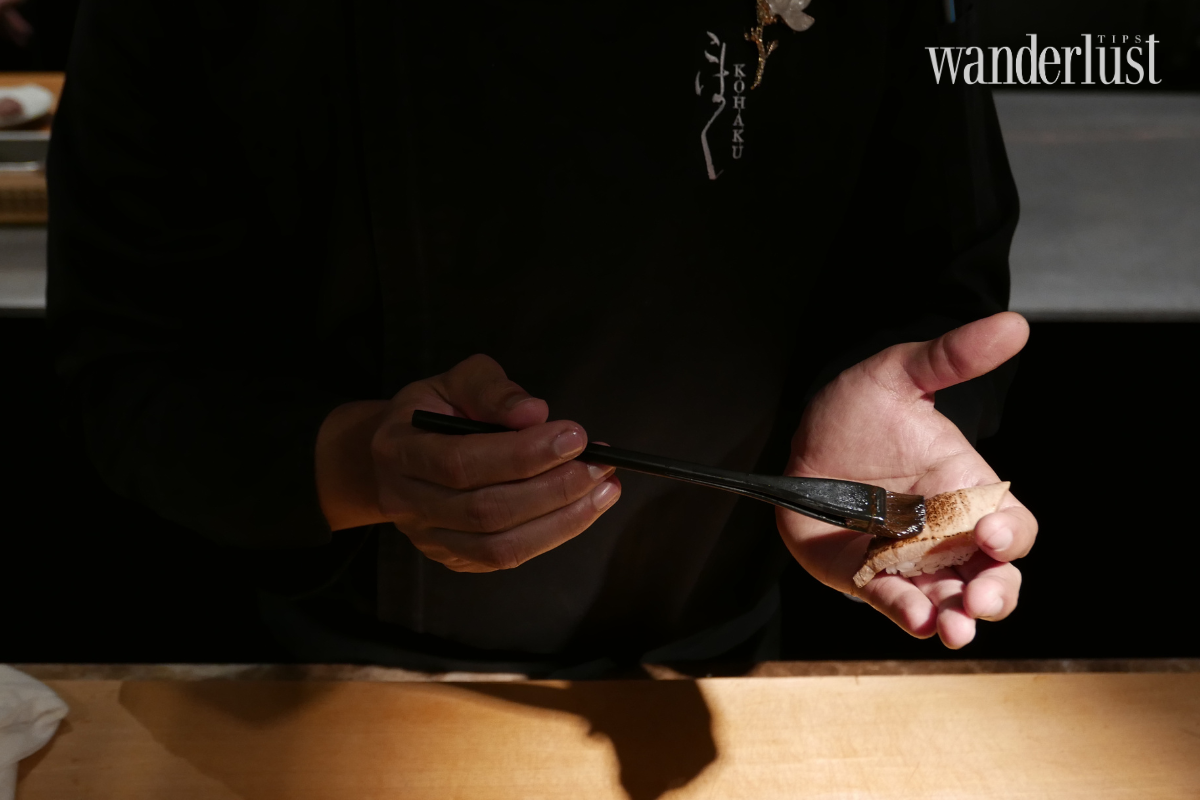
- The Soy Sauce Etiquette: In premium Omakase, the Itamae has already brushed a delicate layer of Nikiri Shoyu (sweet soy sauce) onto the fish. If you must dip, turn the nigiri upside down to dip the fish side only. Never dip the rice it will act like a sponge, absorbing excess salt and causing the piece to crumble.
Body Language: Embrace the Tradition of Eating with Hands
Many assume chopsticks are the height of politeness, but at an authentic Omakase sanctuary, eating with your fingers is the true mark of a seasoned gourmet. The Itamae packs the rice with tiny air pockets to ensure a melt-in-the-mouth texture. Chopsticks often compromise this delicate structure. Gently lift the sushi using your thumb, index, and middle finger. This allows you to appreciate the texture and temperature of the piece while signaling to the chef that you truly understand the craft.
The Exchange: Be Open, Be Curious
The essence of Omakase is “trust” – omakase literally means “I leave it up to you.” Keep an open mind. If you have severe allergies (e.g., shrimp or sea urchin), disclose them when booking, not when seated at the counter. However, for ingredients you’ve simply never tried, step out of your comfort zone. Compliment the chef with a sincere “Oishii!” (Delicious!), and close the evening with “Gochisousama deshita” (Thank you for the feast). Your genuine appreciation is the most potent fuel for an Itamae’s creativity.
Mastering the Omakase counter isn’t about rigid dogma; it’s about arriving with an open heart and a deep respect for the artisan. Honor the counter, and in return, it will elevate your evening into a sublime experience one where you are not just a diner, but a true connoisseur of the craft.
Explore related articles:
Omakase Beverage Pairing: A Luxurious Culinary Art
Itamae Omakase Chef: The Silent Captain Behind the Counter
Omakase: When Gastronomy is a Symphony of Trust and Aestheticism