

Omakase beverage pairing is the essential catalyst that transforms an Omakase feast into a resounding culinary masterpiece, mirroring the artistry of the Itamae who weaves delicate notes of oceanic flavors.
In the realm of haute cuisine, selecting the perfect drink is not merely a means of refreshment; it is a calculated aesthetic endeavor designed to honor, resonate with, or spark unexpected brilliance in every slice of fresh fish. From traditional Sake brewed from the pristine snow-melt waters of Japan to the sophisticated effervescence of Western Champagne, every beverage holds a unique “code” to harmonize with the Omakase experience.
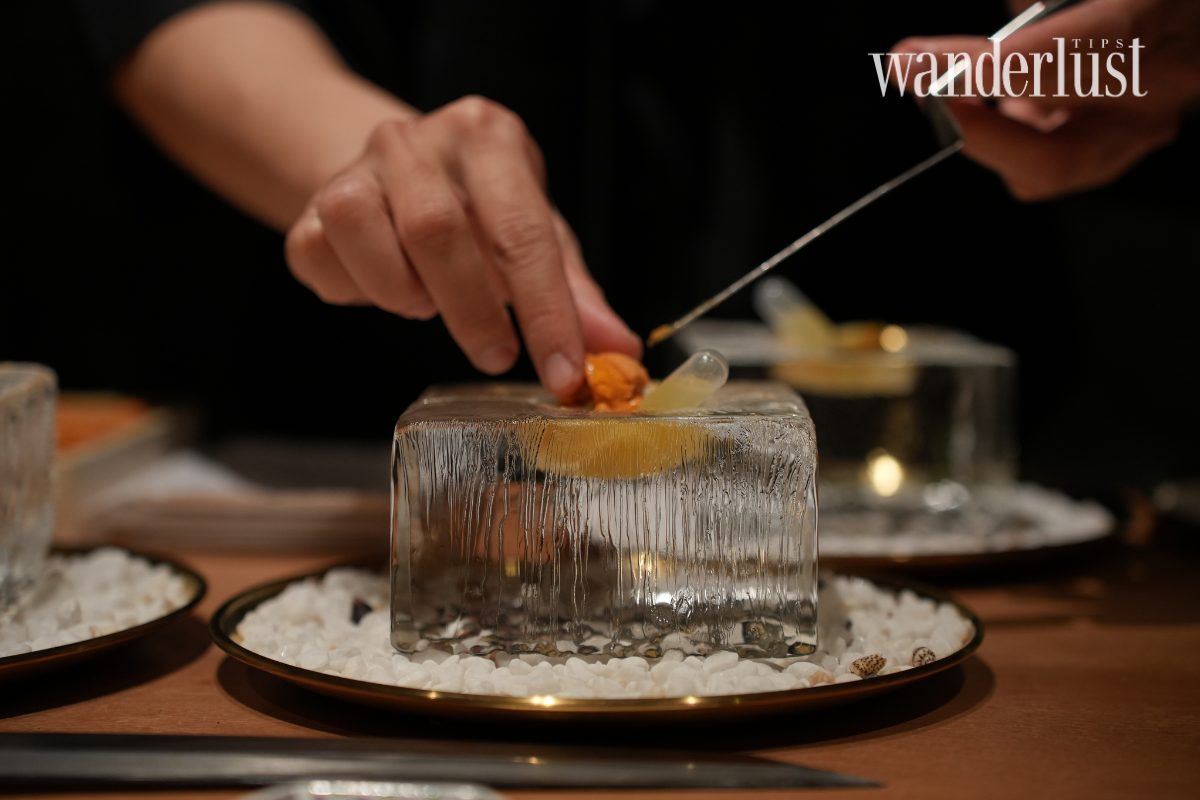
Classic Sake & Omakase Beverage Pairing: A Meeting of Kindred Spirits
Sake and Omakase are inherently destined for each other. The brilliance of this pairing lies in their shared cultural heritage and the shared philosophy of honoring original flavors. However, each stage of the Omakase journey demands a Sake with a distinct character:
- Junmai Daiginjo (The Pinnacle of Sake): With a polished rice ratio often below 50%, this premium Sake offers elegant notes of ripened fruits (such as pear and honeydew) and a silk-like finish. It is the perfect companion for delicate Otsumami appetizers or white-fleshed sushi (Shiromi) like Sea Bream (Tai) or Flounder (Hirame), where the flavors are subtle and require a drink that elevates rather than overwhelms.
- Tokubetsu Junmai or Honjozo: As the feast transitions to richer, more intense sushi courses like soy-marinated tuna (Akami Tsuke) or Sea Eel (Anago), Sake varieties with fuller bodies, sharper acidity, and a “dryer” texture become the ideal choice. They balance the richness of the fish oils, cleansing the palate to prepare the diner for the next exquisite bite.
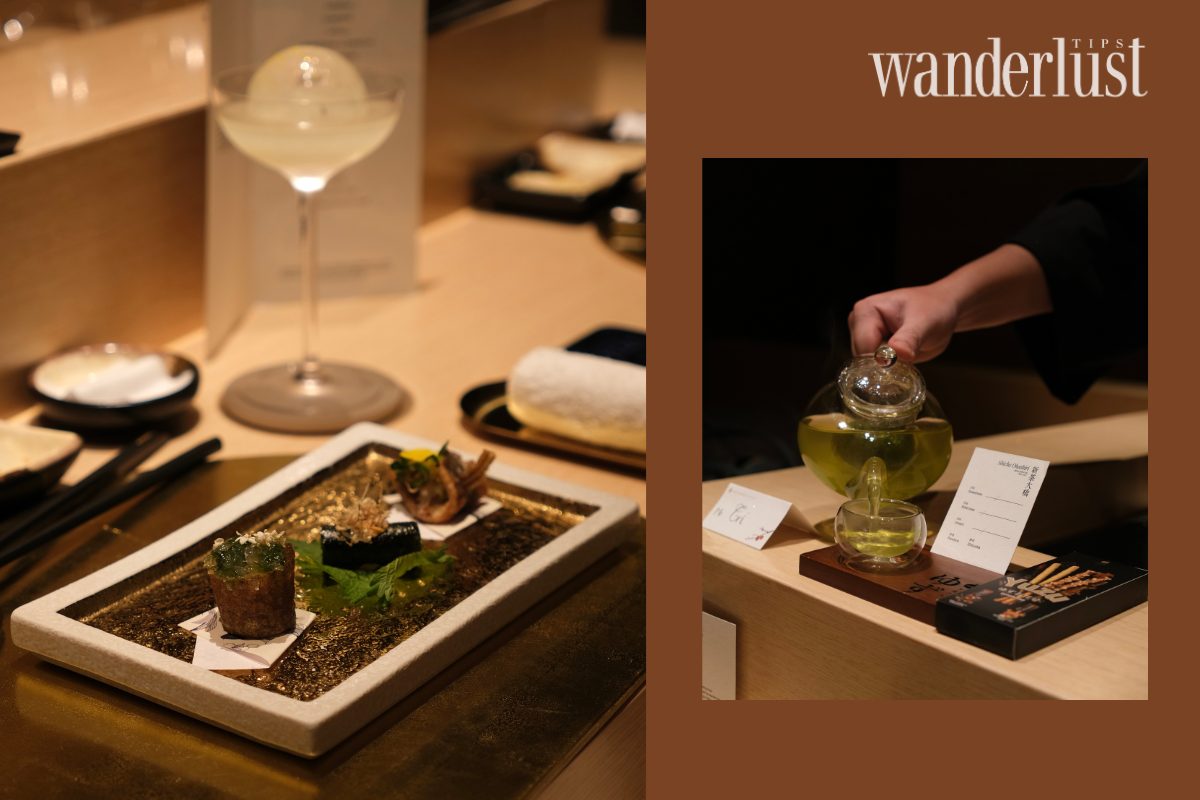
Champagne and White Wine: A Contemporary Departure
Global culinary trends have paved the way for spectacular cultural intersections. Today, in Michelin-starred Omakase restaurants from Tokyo to Paris and Saigon, the appearance of slender crystal glasses filled with Western wines has become a symbol of a modern, sophisticated lifestyle.
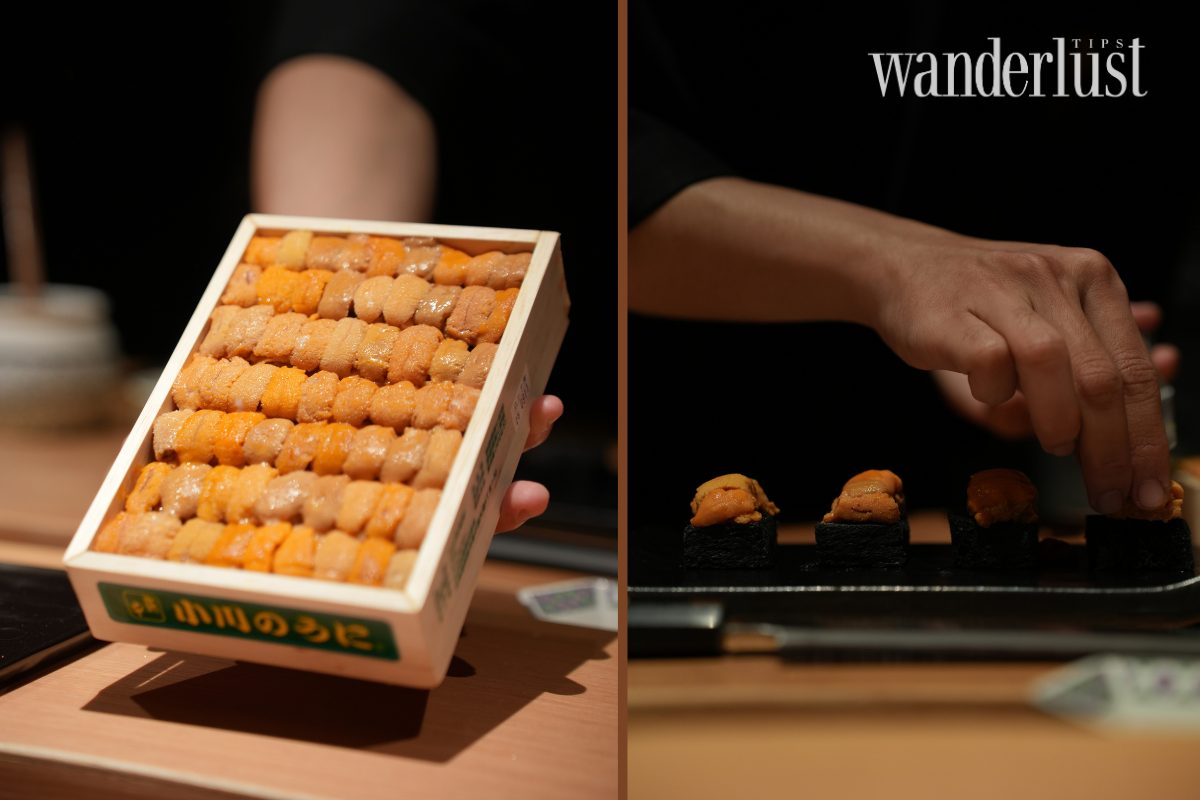
- Champagne Brut / Blanc de Blancs: The Sovereignty of Effervescence. The tiny, continuous bubbles and crisp acidity of a Champagne made entirely from Chardonnay grapes serve as a “secret weapon” when paired with light Tempura or decadent items like Fatty Tuna (Otoro) and Sea Urchin (Uni). The natural acidity and bubbles act as a magical broom, sweeping away any lingering richness while awakening the palate’s taste buds.
- Chablis or Sauvignon Blanc: The Whisper of Minerality. White wines from the Chablis region (Burgundy, France) are renowned for their sharp minerality, reminiscent of limestone and crisp citrus notes. This purity, when paired with artisanal oysters or shellfish like Scallops (Hotate) and Sweet Shrimp (Amaebi), elevates the natural sweetness of the seafood to new heights.
The Rule of “Temperature”: The Key to Sophistication
If the Itamae strictly controls the sushi rice temperature to match the human body (36.5 – 37°C), the Sommelier must also master the temperature of every glass served:
- Premium Sake (Daiginjo) and Champagne/White wine are always chilled to 8 – 12°C to preserve their fresh, floral essence.
- Conversely, certain traditional, rice-forward Sake varieties may be served lightly warmed (Atsukan) towards the end of the feast, just before the piping hot Miso soup is served, creating a gentle, warming finale for the diner.
The art of pairing in Omakase has no absolute limits; it is driven by the personal aesthetic and experience of each individual. When you allow yourself to experiment with a sip of Champagne interspersed between traditional sushi pieces, you are experiencing Omakase with the flair of a global citizen-liberated, aesthetic, and ceaselessly seeking new pinnacles of the art of living.
Explore related articles
Omakase: When Gastronomy is a Symphony of Trust and Aestheticism