

On November 1, 2025, after more than two decades of anticipation and numerous delays, one of the most monumental and highly-anticipated cultural projects of the 21st century officially opened its doors: the Grand Egyptian Museum (GEM), also nicknamed the “Fourth Pyramid” of the land of the Nile.
With a total investment exceeding $1 billion, GEM is not merely a museum; it is a proud declaration by modern Egypt about its magnificent heritage. This completely new tourism destination promises to redefine the global map of cultural travel and serves as the most compelling reason to set foot in Egypt today.
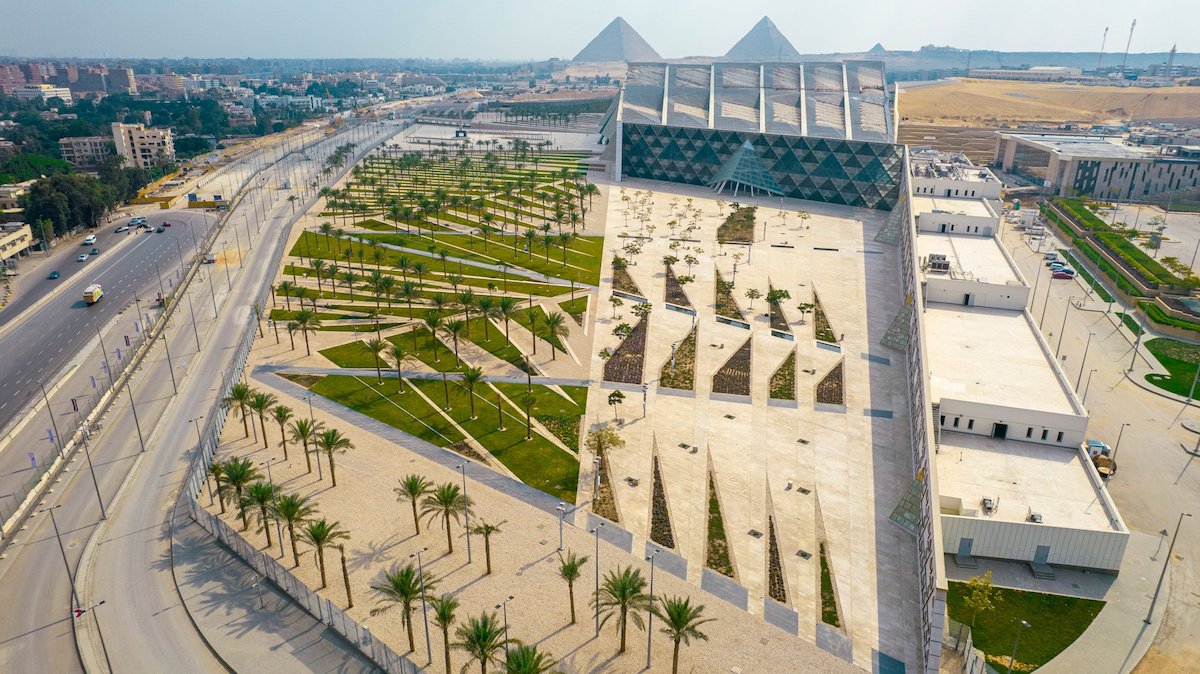
Iconic Architecture: Where Modernity Intersects Antiquity
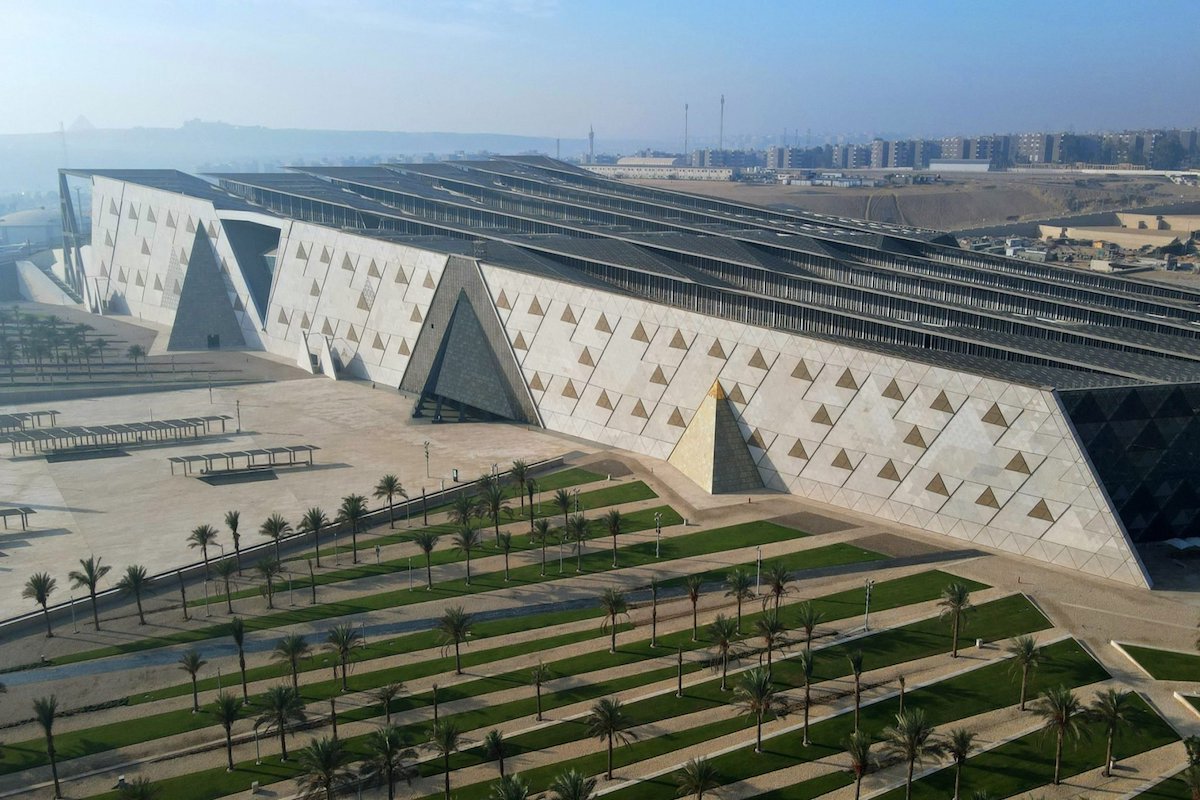
Located in Giza, just about 1 mile (1.6 km) from the legendary Giza Pyramid Complex, the location of the Grand Egyptian Museum speaks volumes about its scale and significance. The museum was designed by the Irish architectural firm Heneghan Peng Architects, boasting a total area of up to 480,000 square meters (5.2 million sq ft).
The architecture of GEM is an absolute tribute to the neighboring Pyramids. The colossal façade is designed in a beveled triangle or skewed rectangle shape, using glass and stone materials that evoke the geometry and grandeur of the Pyramids. The museum’s North and South walls are precisely aligned with the Khufu and Menkaure Pyramids, creating a powerful and intentional visual link between the ancient heritage and the modern structure.
This design is not just art, but philosophy: It invites visitors on a journey through time, where the great past is clearly viewed through the lens of the future.
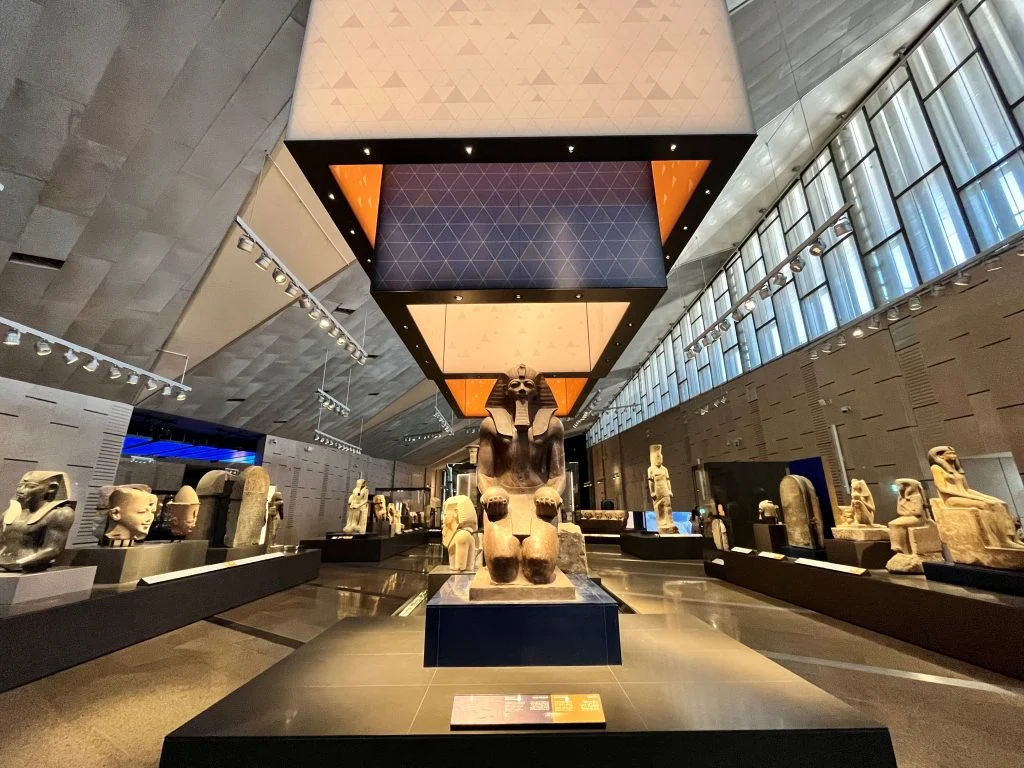
Stepping into the expansive 10,000-square-meter Atrium, visitors are immediately struck by a scene of imposing majesty. Center stage stands the colossal granite statue, 11 meters (36 ft) tall and weighing 83 tons, of Pharaoh Ramses the Great – one of the most powerful and renowned kings of the 19th Dynasty. This 3,200-year-old statue, which graced Ramses Square in Cairo for decades, has now found its most fitting place, acting as a “gatekeeper” welcoming every visitor.
From the Atrium, guests can gaze out to admire the Giza Pyramids – a truly unique experience.
Priceless Treasures: Journeying Through Over 5,000 Years of History
The Grand Egyptian Museum is the largest museum in the world dedicated to showcasing a single civilization – that of ancient Egypt. Housing over 100,000 artifacts, with around 57,000 on display, GEM is a massive historical treasury. The permanent exhibition area spans 24,000 square meters, organized into 12 main galleries, telling the story of ancient Egyptian society through three core themes: Kingship, Society, and Belief.
This is the heart and the biggest draw of GEM. For the first time since the young pharaoh Tutankhamun’s tomb was discovered in 1922, the entire collection of 5,390 precious artifacts found will be displayed together in one dedicated space, covering 7,500 square meters.
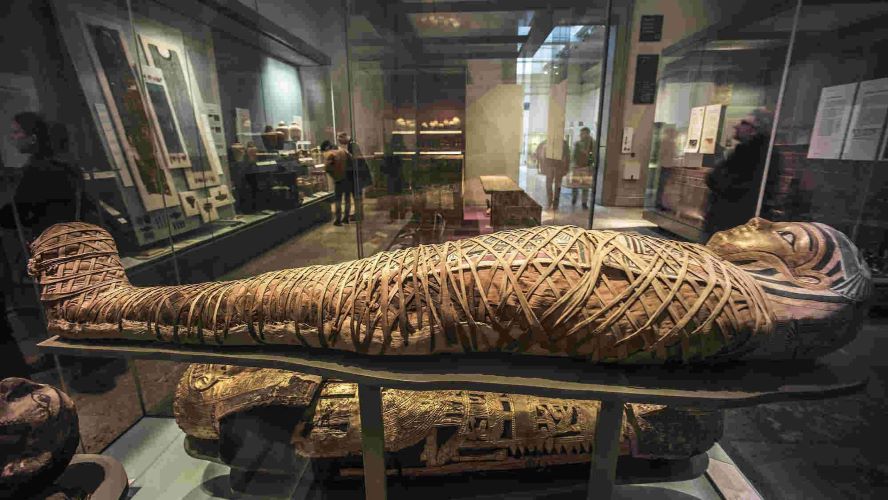
Visitors will have the opportunity to view:
- The iconic Gold Mask of Tutankhamun.
- The nested gold-plated sarcophagi.
- The Royal Chariots and thousands of other funerary objects, including jewelry, weapons, and furniture.
The complete display of this collection provides a comprehensive, in-depth picture of the life, death, and funerary rituals of the legendary king—something the old Egyptian Museum (in Tahrir Square) was never able to achieve due to space constraints.
Beyond Tutankhamun, GEM also hosts many artifacts of unparalleled historical and archaeological value:
- Pharaoh Khufu’s Solar Boat: One of the world’s oldest and most intact vessels, dating back about 4,500 years, once buried near the Giza Pyramid. This boat is believed to be the means by which the Pharaoh’s soul traveled with the Sun God Ra.
- The Grand Staircase: An impressive exhibition space connecting the floors, where colossal statues and artifacts are arranged in chronological order, guiding visitors backward through Egyptian history.
High-Tech Experience: A 21st-Century Museum
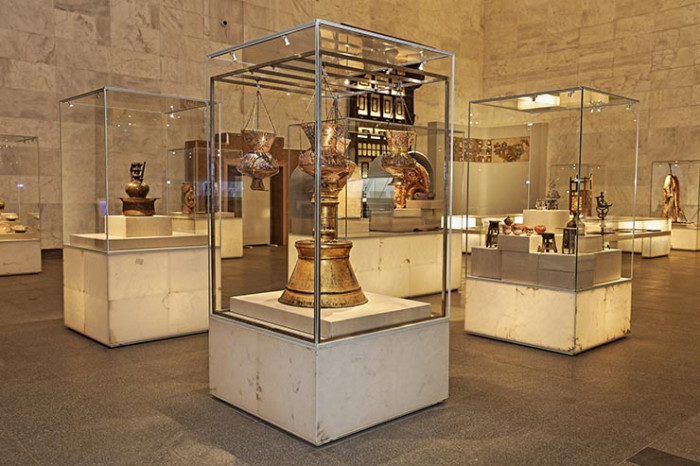
GEM is not just a repository of heritage but also a modern educational and entertainment center. The museum has integrated the latest advanced technologies to provide vibrant and authentic interactive experiences, making the exploration of historical artifacts more engaging than ever.
- Multimedia Displays: The galleries feature 3D imaging, Virtual Reality (VR), and multimedia presentations that help recreate historical contexts, daily life, and ancient ceremonies.
- Conservation and Restoration Center: GEM houses one of the largest conservation centers globally, allowing visitors to observe the preservation work through glass windows. This demonstrates Egypt’s commitment to safeguarding its heritage for future generations.
- Children’s Museum: A separate area dedicated to children, using visual and interactive educational methods to sow the seeds of love for history and archaeology early on.
- Additional Amenities: The complex also includes a conference center, a 3D cinema, commercial areas, high-end restaurants, and cafes, transforming GEM into a comprehensive cultural and entertainment destination.
Driving Tourism: Egypt’s Strategic Vision
The opening of the Grand Egyptian Museum is a crucial part of Egypt’s national strategy to modernize its tourism industry and attract a larger volume of international visitors. Tourism experts project GEM will draw approximately 5 to 7 million visitors annually, serving as the “key” to help Egypt achieve its goal of hosting 30 million tourists by 2030.
GEM is poised to change the trajectory of tourism in Cairo. Previously, visitors often only briefly visited the Pyramids before quickly moving on. Now, with GEM, the duration of stay in the Giza and Cairo area will be extended, generating significant economic benefits for the country. It positions Egypt not only as a nation with ancient sites but also as a world-leading center for cultural preservation and research.
Tips for Visitors: Maximizing Your GEM Experience
1. Best Time to Visit:
- Early morning is the ideal time to avoid crowds and enjoy the stunning natural light filtering through the glass façade.
- Plan to spend a full day at GEM. Given its massive scale and the vast number of artifacts, you cannot fully explore it in just a few hours.
- Consider purchasing tickets online in advance to save time waiting in line.
2. Areas to Prioritize:
- The Grand Atrium: Admire the Ramses II statue and take photos with the Pyramids in the background.
- The Tutankhamun Galleries: This is the non-negotiable highlight. Dedicate at least 2–3 hours here.
- The Grand Staircase: This area features many large statues and tells the historical narrative in a very scientific, chronological order.
3. General Notes:
- GEM is a huge complex; wear comfortable shoes.
- Hire a professional guide or use the museum’s multimedia application (if available) to gain a deeper context of each artifact.
The Grand Egyptian Museum is not just a place for preserving the treasures of a sleeping civilization; it is a monumental, symbolic structure that opens a new chapter for Egyptian tourism and culture. It is a mesmerizing destination, inviting visitors from around the globe to touch the past, behold the present, and look toward the future of the land of the Pyramids.