

On Con Au Islet, reachable only by boat across the Hau River, Legacy Mekong, Can Tho, Autograph Collection treats heritage as something lived rather than displayed. General Manager Alwin Karkada explains how a river crossing, local flavors, a team rooted in the Delta and unhurried days beneath century-old banyan trees invite guests to understand the Mekong on its own terms.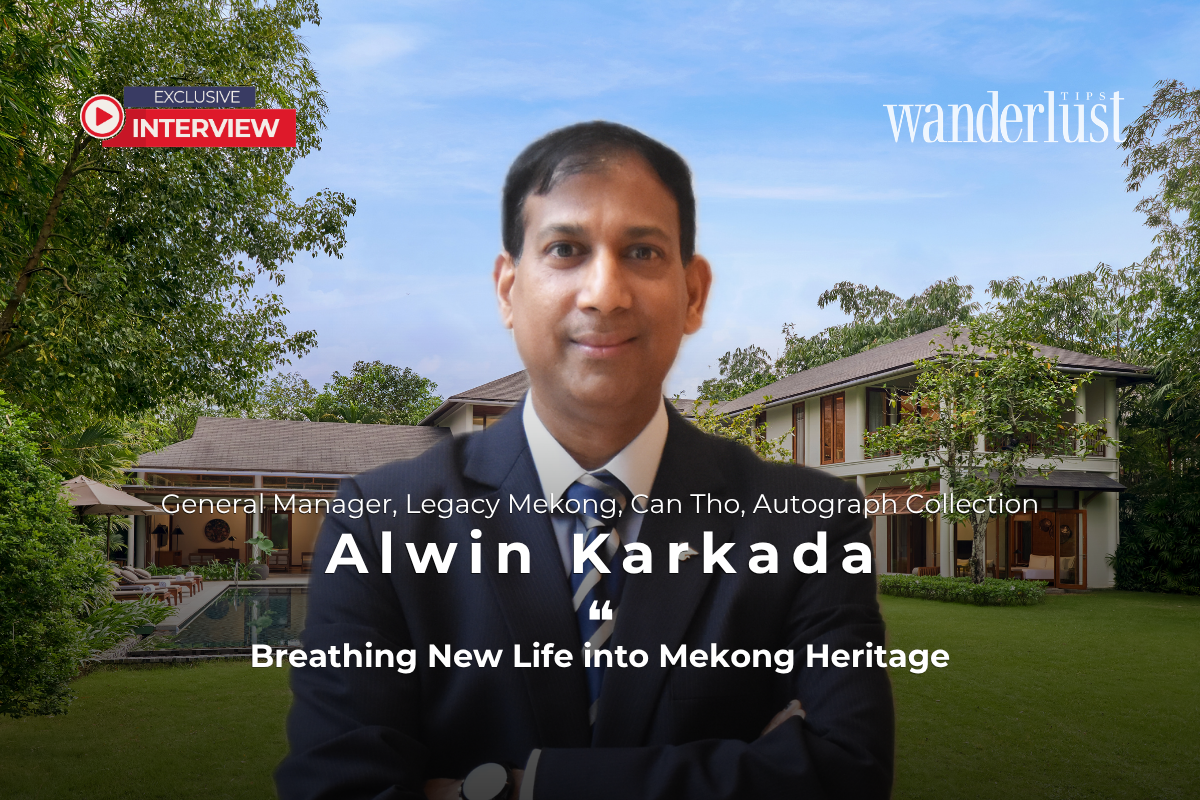 Dear Mr. Karkada, thank you for taking the time to speak with Wanderlust Tips about the living culture of the Mekong Delta at Legacy Mekong, Can Tho, Autograph Collection, as part of our feature, Living Heritage.
The resort sits on Con Au Islet in the Hau River, a place guests can only reach by boat. At Legacy Mekong, what does “living heritage” mean in the Mekong Delta, where so much of the culture unfolds in everyday life along the river?
For us, “living heritage” means experiencing the Mekong as it is lived today, rather than simply looking back at its past. Our location on Con Au Islet makes that connection especially meaningful. Here, water is not simply part of the landscape; it has shaped how people travel, trade, cook, gather and live for generations. At Legacy Mekong, we want guests to encounter this heritage naturally through local flavors and ingredients, craftsmanship, stories, rituals and, most importantly, through the people they meet. These are not recreations of the past, but expressions of a culture that continues to evolve. Our role is to create the space for guests to slow down and engage with that way of life, leaving with a deeper understanding of the Mekong not only as a destination, but as a living culture shaped by the river.
Every stay begins with a private boat transfer from the Legacy Mekong Pavilion to the islet. How does that short river crossing prepare guests to experience the Mekong on its own terms?
The experience of Legacy Mekong begins before guests even arrive. From our Pavilion, they step aboard our private boat and, within a short journey, the city begins to recede. The sounds change, the pace slows, and the river becomes the center of the experience. That transition is important because the Mekong has always been understood from the water. Arriving by boat allows guests to experience the landscape in its natural rhythm, passing along the Hau River before entering the greenery and quiet of Con Au Islet. It is a relatively short crossing, but emotionally it creates a real sense of departure. You leave the pace of the city behind and arrive more open to observing, listening and experiencing the Delta on its own terms.
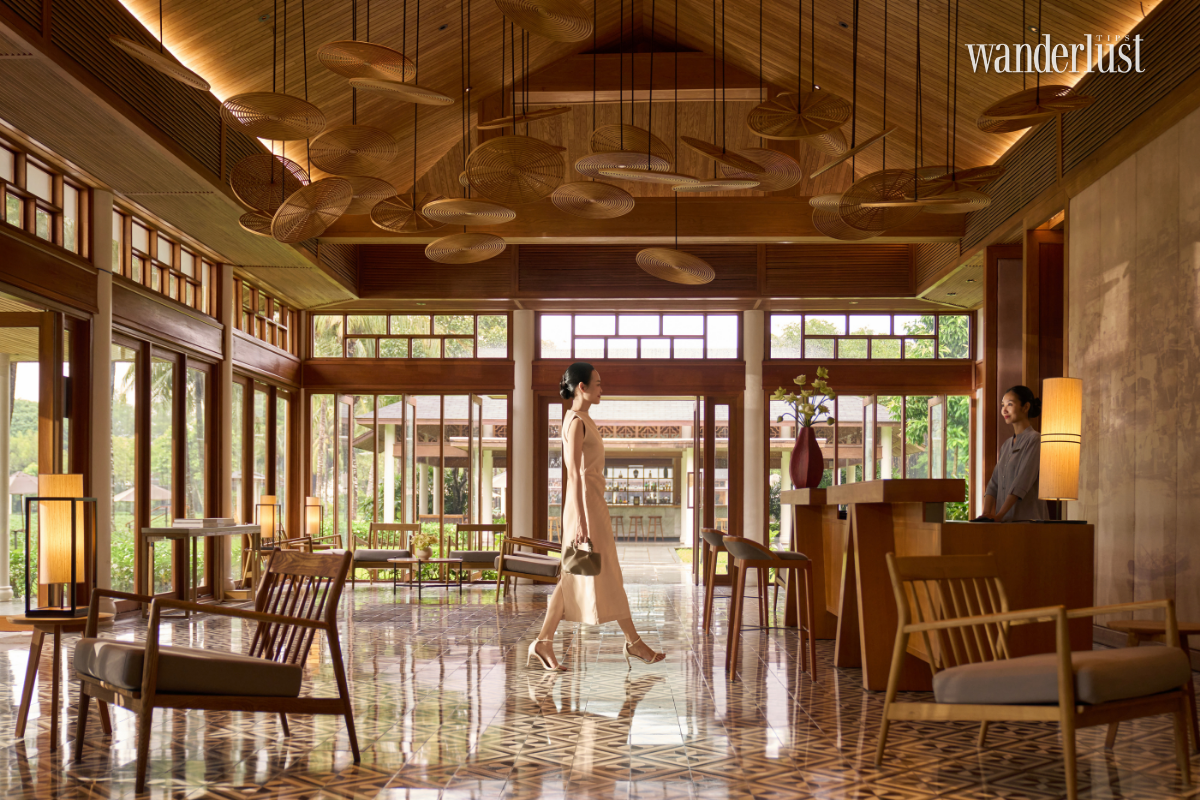
The resort describes its design as a blend of contemporary elegance and Vietnamese craftsmanship. When heritage becomes part of a room, a bungalow or a villa, how does Legacy Mekong keep it feeling authentic and lived-in, rather than purely decorative?
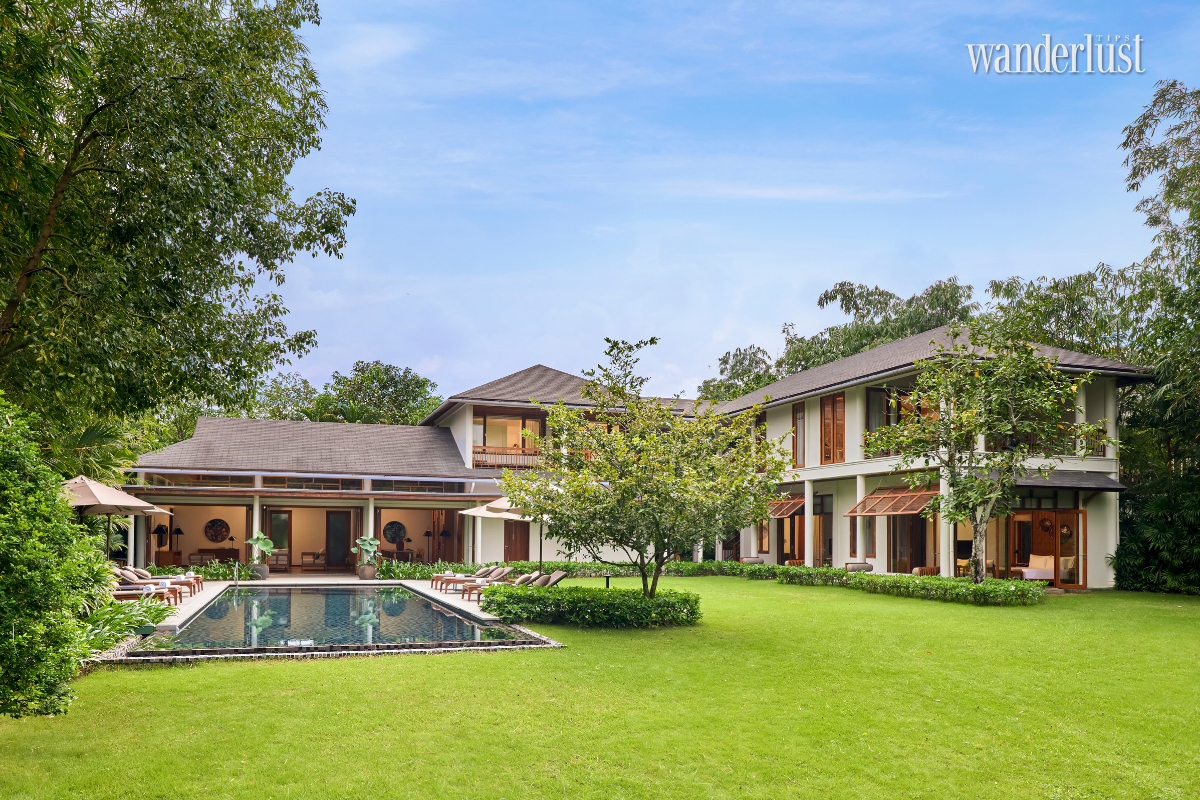
For us, authenticity comes from allowing heritage to inform the atmosphere rather than turning it into decoration. Our bungalows sit naturally among tropical gardens, beneath mature banyan trees and beside the river and lotus ponds, while the villas offer a more contemporary and minimalist interpretation of living in the Delta. Vietnamese craftsmanship, natural materials, textures and details create a connection to place, but we also want the spaces to feel comfortable and relevant to the way people travel today. Heritage should never feel like a museum. Perhaps the most important design element is what surrounds the architecture itself: the changing light, the water, the greenery and the century-old banyan trees. These are living elements of the property, and they give every space a character that could only belong here.
At the resort’s restaurant, Mekong cuisine is prepared with local ingredients and regional flavors. What can a Mekong meal served there tell guests about the Delta that a guidebook cannot?
A guidebook can explain what people in the Mekong eat, but a meal can tell you why they eat that way. The Delta is one of Vietnam’s most fertile regions, and its cuisine has always been closely connected to the river, the seasons and what the land provides. At our restaurant, local ingredients and regional flavors allow us to tell those stories through taste. The kitchen also brings guests closer to the process: the ingredients, techniques and people behind each dish. For me, food is one of the most immediate ways to understand a place. A flavor can evoke a family memory, an ingredient can reveal something about the landscape, and a recipe can carry knowledge from one generation to another. That emotional dimension is something no guidebook can fully reproduce.

Legacy Mekong Spa draws on natural textures, herbal scents and treatments inspired by traditional healing practices. How does the spa balance respect for those traditions with the expectations of today’s international wellness traveler?
Our approach is to take inspiration from local knowledge without trying to reproduce traditional practices simply for effect. Natural textures, herbal aromas and treatments inspired by familiar ingredients create a sense of place, while the quality, comfort and delivery of the experience meet the expectations of today’s international traveler. Beyond the spa, guests can also choose from contemporary activities such as yoga, Pilates and outdoor movement, allowing wellness to feel personal rather than prescribed. Ultimately, the Mekong itself is an important part of that experience. The greenery, water and slower rhythm of the islet naturally encourage guests to disconnect from the pace of everyday life. Sometimes wellness is not about doing more; it is about creating enough space to become still again.
The Cai Rang and Phong Dien floating markets remain among the most vivid expressions of daily life in the Delta. When guests set out to explore them, how does the resort encourage an experience that feels respectful to local communities, rather than simply a sightseeing stop?
The floating markets are meaningful because they developed from everyday life and commerce on the river; they were never created as tourist attractions. That distinction is important. We encourage guests to approach them with curiosity and respect: to observe the rhythms of the market, interact thoughtfully with local vendors, try local produce and understand the role the river continues to play in people’s livelihoods. We also believe that responsible travel should create value for the communities being visited. The best experience is not necessarily about seeing as much as possible, but about taking the time to understand what you are seeing. When travelers approach the Delta in that way, tourism becomes an exchange rather than simply observation.

Around Can Tho, landmarks such as Binh Thuy Ancient House, Ong Pagoda and the Munirangsyaram Khmer Buddhist Temple reflect the many cultures that have shaped the Delta. How does Legacy Mekong help guests appreciate that layered identity during their stay?
One of the fascinating things about Can Tho and the wider Delta is that there is no single cultural story. Vietnamese, Chinese and Khmer influences have existed alongside one another for generations, shaping architecture, spirituality, cuisine and everyday customs. Places such as Binh Thuy Ancient House, Ong Pagoda and Khmer temples allow guests to see those layers beyond the resort. We encourage exploration, but we also try to provide context, because understanding why a place matters often makes the experience far richer than simply visiting it. Back at Legacy Mekong, that same philosophy continues through food, craftsmanship and storytelling. We want the resort to be a starting point for discovering the region, rather than an environment that separates guests from it.
Much of a region’s heritage lives in its people. How does the Legacy Mekong team bring the warmth and stories of the Mekong into the way they welcome guests each day?
The most genuine expression of Mekong hospitality comes from our people. Many members of our team have grown up in this region, so their relationship with the Delta is personal rather than something learned from a script. You feel that in small interactions: the way a local ingredient is explained, a story shared about a tradition, or a recommendation given for somewhere to visit. These moments may appear simple, but they often become the memories guests take home. We can design beautiful spaces and experiences, but genuine warmth cannot be manufactured. Our responsibility is to give our associates the confidence to bring their own knowledge, personality and connection to the region into the way they welcome guests. In that sense, our people are perhaps our most important storytellers.
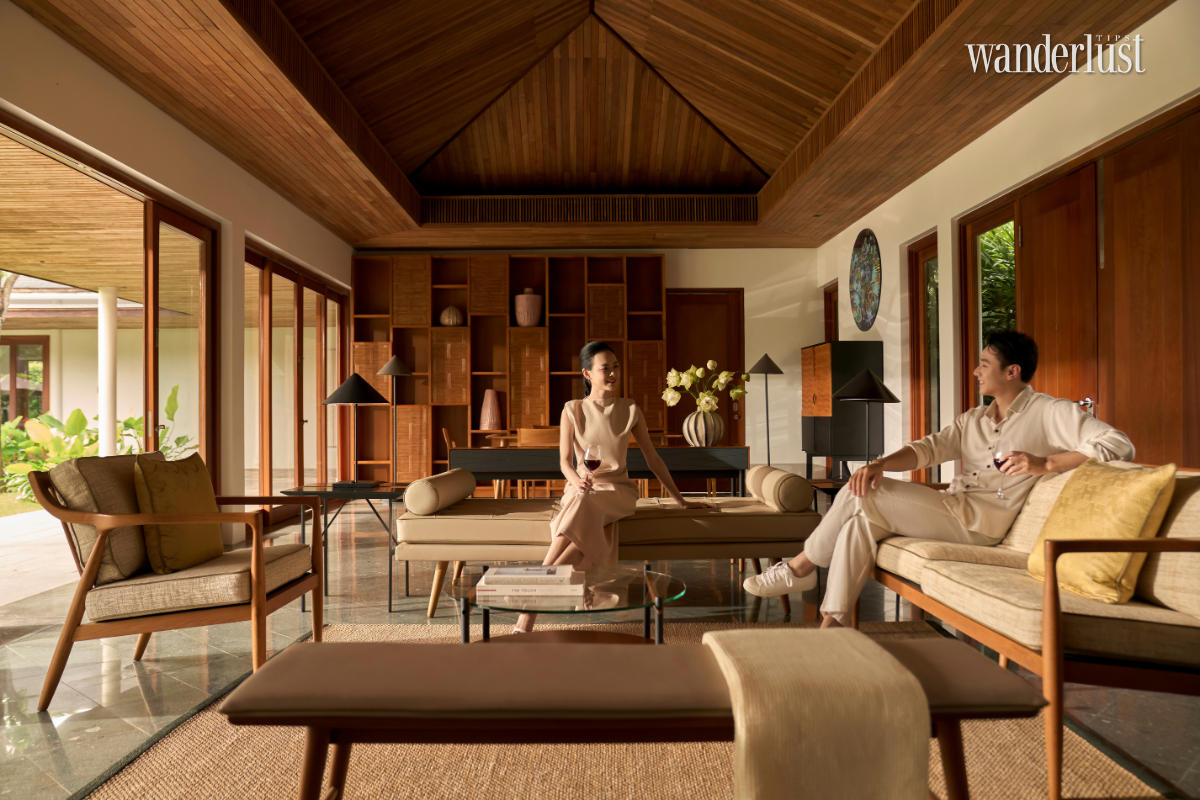
With family villas of three to five bedrooms and a dedicated Kids Club, the resort clearly welcomes multi-generational travel. How can a family holiday on the islet become a way of passing Mekong heritage on to the next generation?
Children often connect with culture differently from adults. They learn through touching, making, tasting, exploring and asking questions, so we try to make their experience of the Mekong feel natural and playful. Our three-, four- and five-bedroom villas allow several generations to stay together, while the Kids Club, creative workshops, outdoor spaces and nature-led activities give younger guests room to discover at their own pace. But perhaps the most meaningful part is simply experiencing the destination together: arriving by boat, walking beneath old trees, discovering local flavors or watching life along the river. These shared experiences create conversations between generations. Heritage becomes something children remember because they experienced it with their family, rather than something they were taught.
Legacy Mekong has already received prestigious international awards. Looking ahead, how does the resort hope to shape the way travelers see Can Tho and the Mekong Delta as a destination for living heritage?
International recognition is meaningful to us, but what matters more is what that recognition can contribute to the destination around us. We would like Legacy Mekong to help broaden the way international travelers perceive Can Tho and the Mekong Delta. The region should not simply be somewhere travelers pass through briefly or visit only for the floating markets. There is enough cultural depth, nature, cuisine and human connection here to reward a slower and more considered journey. As part of Autograph Collection, we have the opportunity to connect that very local story with an international audience while preserving what makes it distinctive. If guests leave wanting to understand more about the Mekong, stay longer, return again and encourage others to experience it thoughtfully, then I believe we are contributing something meaningful to the destination.
Wanderlust Tips sincerely thanks Mr. Karkada for sharing his valuable insights into the living culture of the Mekong Delta, and wishes him and the Legacy Mekong team continued success.
About Legacy Mekong, Can Tho, Autograph Collection
Set across eight hectares of lush greenery on secluded Con Au Islet in the Hau River, Legacy Mekong, Can Tho, Autograph Collection is a retreat shaped by the landscape, culture and rhythms of Vietnam’s Mekong Delta. Accessible by a private boat journey from the hotel’s Pavilion, the resort features 60 bungalows and 5 private pool villas surrounded by tropical gardens, lotus ponds and century-old banyan trees. Its experiences draw inspiration from the region’s cuisine, craftsmanship, nature and everyday traditions, while contemporary facilities offer space for wellness, recreation and family connection. As part of Autograph Collection, Legacy Mekong celebrates an individual sense of place, inviting travelers not simply to visit the Delta, but to slow down, engage with its stories and experience what the resort calls “The Mekong’s Quiet Wonder.”
Whispers of the Forest Beneath Garrya Mù Cang Chải’s Bamboo Roof