

In the heart of Saigon, Mediterra doesn’t try to recreate the Mediterranean wholesale, it lets that coastal spirit take root, speaking through every ingredient, every dish. In conversation with Wanderlust Tips, Chef de Cuisine Carter Trần of Mediterra Restaurant & Bar reflects on a culinary philosophy built on honest, ingredient-driven simplicity, an open kitchen conceived as an invitation, and the balance between Southern European heritage and what Vietnam’s own land and sea can offer.
Wanderlust Tips thanks Carter Trần for taking the time to share his story with us about Mediterra Restaurant & Bar. We were delighted to have him for today’s conversation.
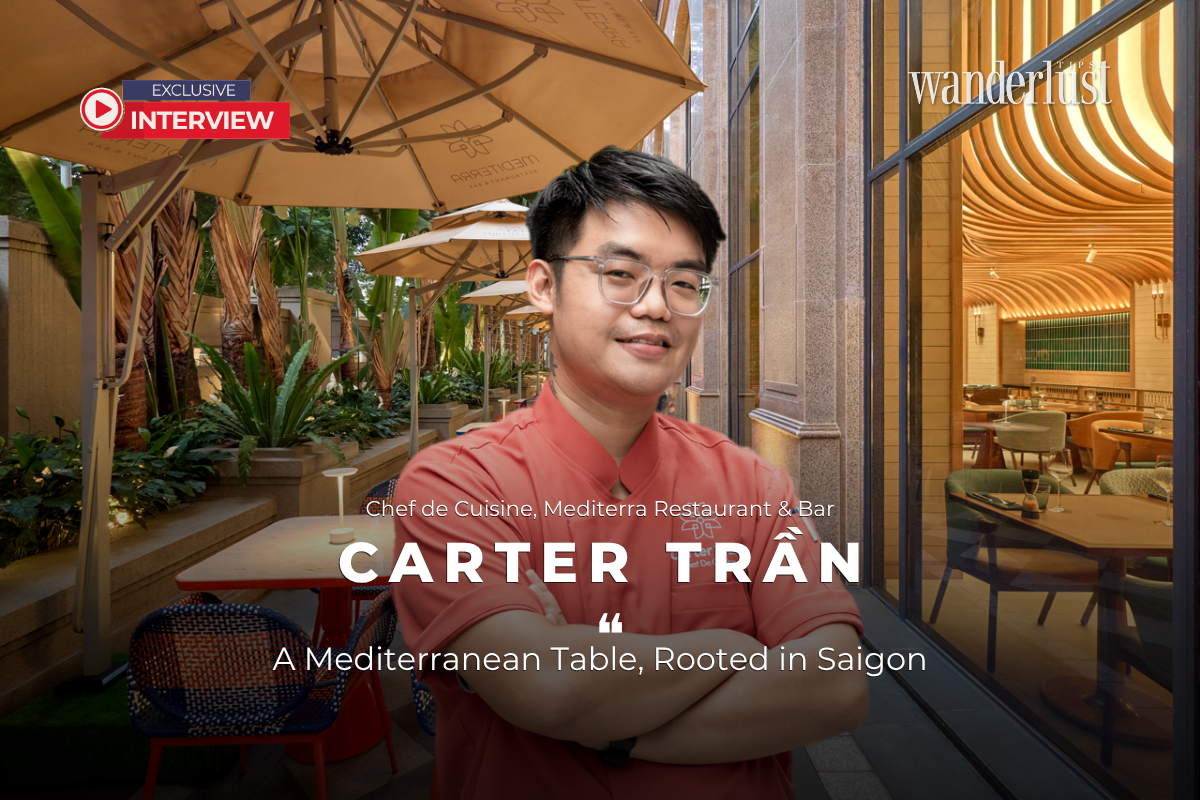
You arrived at Mediterra after a decade shaped by kitchens in Ho Chi Minh City and Sydney. When you were first asked to build this concept from the ground up, what did you already know you wanted to say, and what did you have to unlearn?
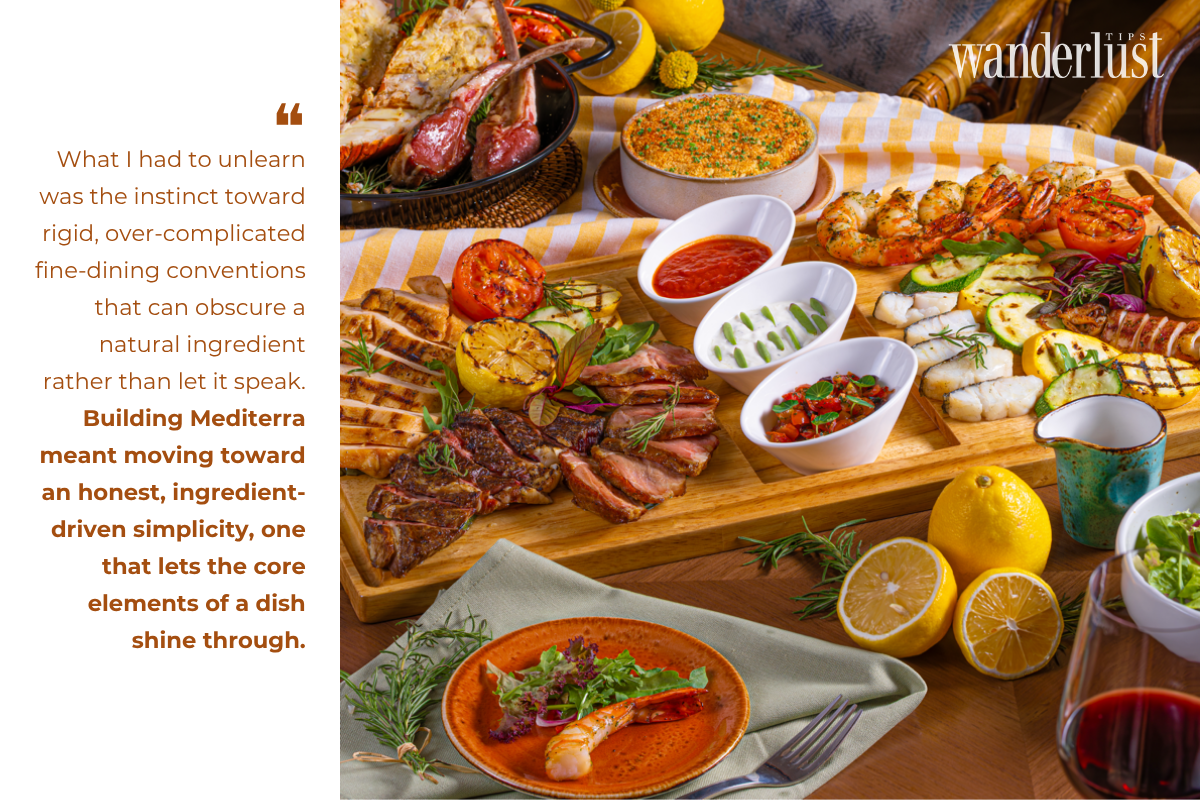
Coming into Mediterra Restaurant & Bar after a decade shaped by kitchens in Sydney and Saigon, what I carried with me was a foundational respect for classical European technique, discipline in prep, in sauce-making, in balancing flavor. What I had to unlearn was the instinct toward rigid, over-complicated fine-dining conventions that can obscure a natural ingredient rather than let it speak. Building Mediterra meant moving away from excessive manipulation and toward an honest, ingredient-driven simplicity, one that lets the core elements of a dish shine through.
You’ve said great flavor begins with great ingredients. In a city like Ho Chi Minh City, where Mediterranean olive oil and produce must travel far to reach the plate, how does that conviction actually get built, sourcing relationship by sourcing relationship?
Great flavor really does begin with great ingredients, and in a city like Ho Chi Minh, that conviction is built through a hybrid sourcing approach. For certain Mediterranean staples, specific olive oils, cured meats, cheeses, importing is simply non-negotiable if we want to stay authentic. But for seafood and vegetables, we partner directly with trusted local producers here in Vietnam, working with what’s ultra-fresh and organic. Quality control starts at the source: our suppliers carefully manage testing and yield, so freshness never comes at the expense of flavor integrity.
The open-kitchen concept at Mediterra is both a culinary choice and a piece of theatre, letting guests watch every dish come together. What does that visibility demand of a kitchen that would otherwise stay hidden behind closed doors, and why was it non-negotiable for this concept?
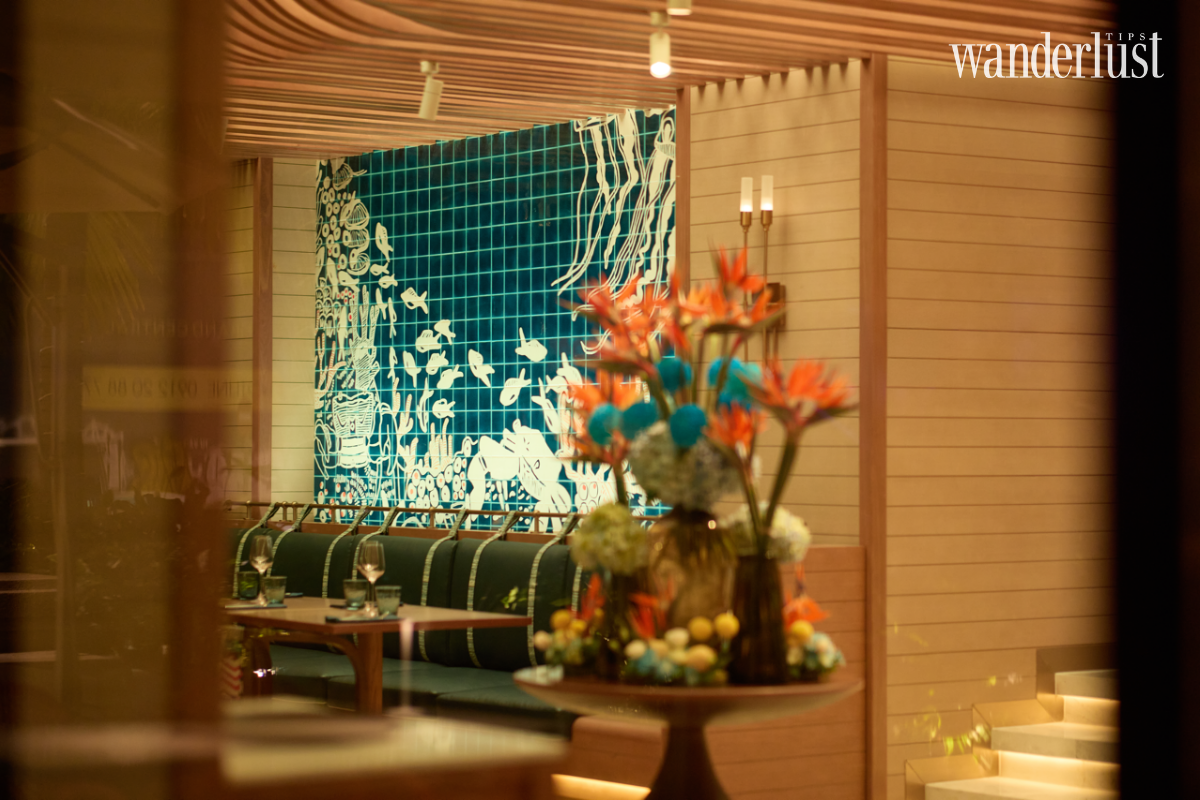
The open kitchen at Mediterra Restaurant & Bar was never meant to be a backstage element, it’s designed to be part of the dining room itself. We wanted a layout that feels airy and unobstructed, where the pass and the stations sit in full view, so guests can watch dishes come together in real time: the plating, the finishing touches, the rhythm of a team working in sync. That openness is deliberate, it mirrors the spirit of the Mediterranean itself, a culture built on open-air markets, shared tables, and cooking done in plain sight rather than behind closed doors. For us, the open kitchen isn’t just a design choice; it’s an invitation for guests to feel closer to the food, and to the people making it.
A restaurant’s culinary concept rarely stays confined to the kitchen. It becomes part of how a luxury hotel is remembered. How does the story you’re telling at Mediterra extend outward and shape the identity of Mai House Saigon Hotel as a whole?
Mediterra serves as the flagship dining destination for the hotel’s luxury culinary identity, bridging the property’s refined Indochine-inspired architecture with a vibrant coastal European dining experience. It elevates guest retention by offering a true destination-dining concept within the hotel, one that enriches the overall guest journey through narrative-driven menus and interactive service moments that guests carry with them long after they check out.
Mediterra draws from France, Italy, Spain and Greece, yet it stands in Vietnam. Where do you draw the line between honoring that Southern European heritage faithfully and reinterpreting it through what Ho Chi Minh City can actually offer?
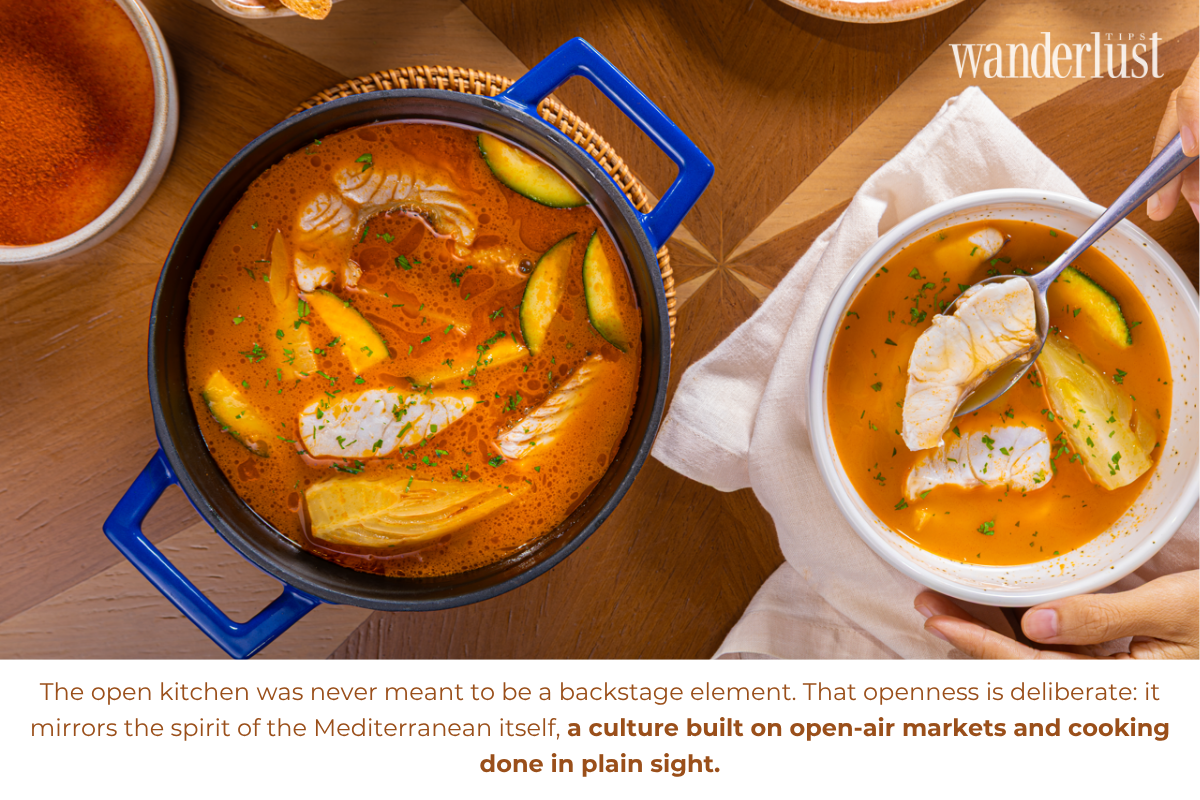
There’s a clear boundary here: the core flavor profiles, the traditional cooking methods, and the iconic regional dishes, a bouillabaisse, a Zarzuela de Mariscos, remain strictly true to Southern European heritage. That’s non-negotiable. Where local integration happens is in sourcing: fresh regional seafood and seasonal Vietnamese produce that match or even exceed the profiles of their Mediterranean counterparts. To me, that’s actually the spirit of Mediterranean cuisine at its core, cooking with what the sea and the land provide.
Shared, communal plates sit at the heart of Mediterranean dining culture. In your view, what does that instinct toward the table as a gathering place offer luxury hospitality right now, at a moment when so much dining has become solitary and transactional?
Family-style, communal dining shifts an experience from formal and transactional to warm and relational. In a luxury setting, that matters more than ever, shared plates naturally encourage conversation and relaxed engagement between guests, which aligns with what today’s travelers are looking for: authentic, unpretentious hospitality that doesn’t sacrifice refinement to feel genuine.
Guests only ever see the finished plate. What is the discipline behind the kitchen, in training, in timing, in the quiet relationships between the kitchen team, that a diner at Mediterra never witnesses but always tastes?
Precise timing, mise en place, and structured communication during service are the foundation of everything that happens behind the pass. Consistency isn’t accidental; it’s achieved through continuous staff training, standardized recipes, careful yield calculations, and strong coordination between the front-of-house and back-of-house teams. Guests taste the result of that discipline even when they never see it happen.
If you had to choose a single dish on the current menu that captures everything Mediterra is trying to say, what would it be, and what is the story sitting underneath it?
If I had to choose one dish, it would be the Zarzuela de Mariscos, our traditional seafood stew. It captures the soul of coastal Mediterranean ports: rich, long-simmered broths built from the fresh regional catch, a precise extraction of natural flavor, and a dish meant to be shared at the center of the table. It’s everything Mediterra is trying to say, on one plate.
Looking ahead, as wellness, sustainability and provenance increasingly define what luxury travelers expect from a kitchen, where do you see Mediterra’s concept heading next?
The concept will increasingly lean into provenance, seasonal menu engineering, and sustainable sourcing, including root-to-stem menu planning that reduces food waste. At the same time, we’re looking at lighter, wellness-conscious Mediterranean preparations that still carry the bold, authentic flavor profiles guests expect from us. It’s about evolving without losing what makes Mediterra, Mediterra.
Wanderlust Tips sincerely thanks Carter Trần for taking the time to share his insights with us.
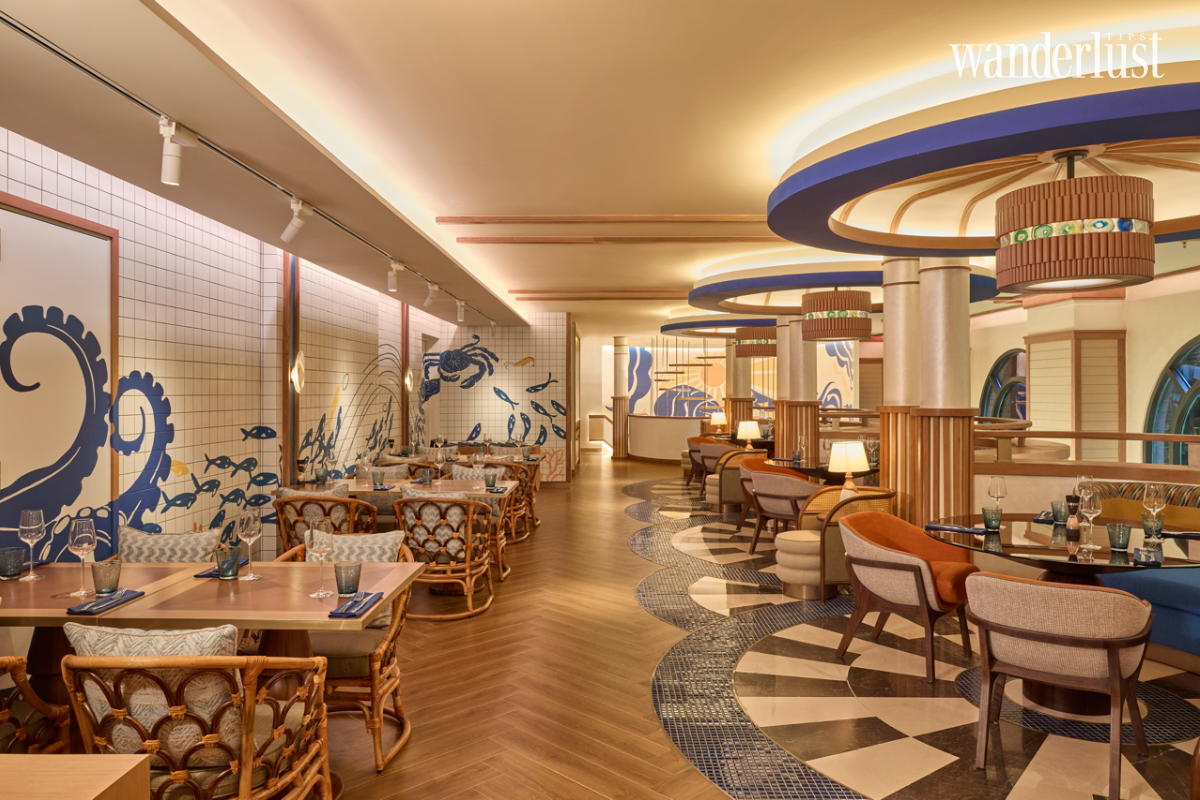
About Mediterra Restaurant & Bar
Nestled within Mai House Saigon Hotel, Mediterra Restaurant & Bar brings the sun-drenched spirit of Southern Europe to the heart of Ho Chi Minh City. Drawing inspiration from the coastal kitchens of France, Italy, Spain, and Greece, the restaurant pairs classical Mediterranean technique with the freshest regional seafood and seasonal Vietnamese produce, honoring tradition while embracing what the local land and sea provide. At its center sits an open kitchen: airy, unobstructed, and alive with the rhythm of chefs at work, inviting guests into the theatre of the meal itself. Family-style plates anchor a dining philosophy built on warmth and connection rather than formality. Under the direction of Chef de Cuisine Carter Trần, Mediterra stands as the hotel’s flagship culinary destination: a place where Indochine-inspired elegance meets the unpretentious, generous spirit of the Mediterranean table.
Henri Giscard d’Estaing: The captain’s leadership at Club Med